

Blogs: Latest Blogs
Scaling Humanitarian Aid in Southeast Asia Before Disaster Strikes: From Research to Action
The Reach Alliance Hackathon team at the 2025 Reach Conference in Singapore.
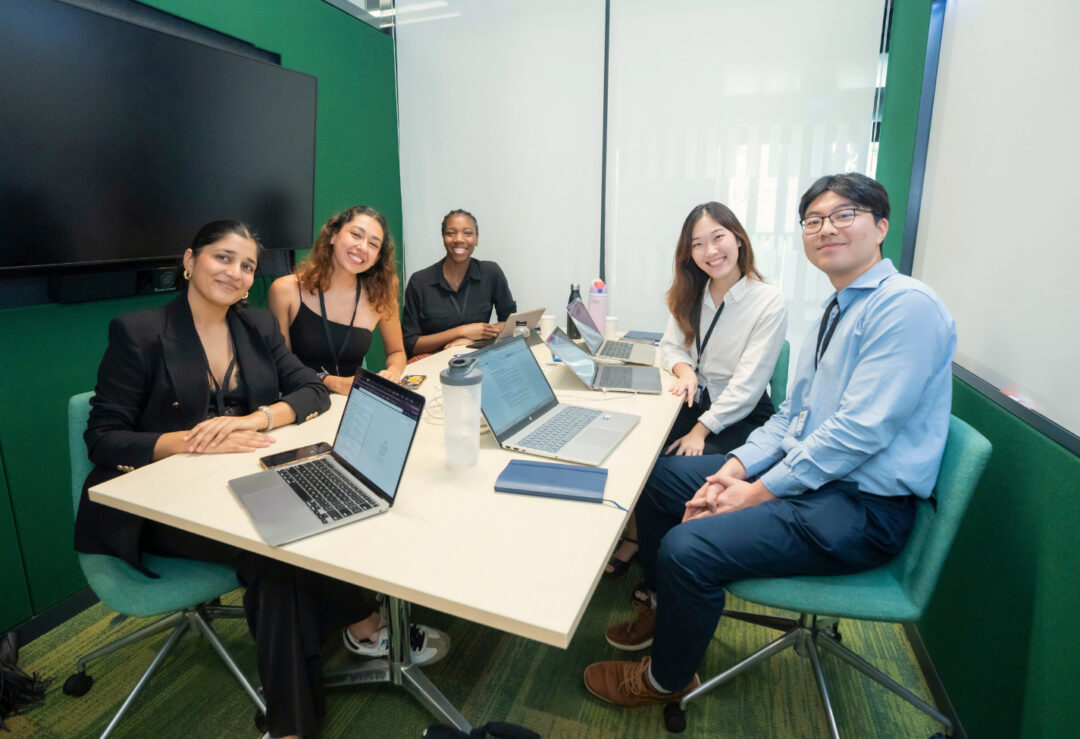
A global research collaboration is advancing insights from Nepal into real-world humanitarian innovation in the Philippines, emerging from the Reach Alliance’s inaugural hackathon at Singapore Management University
By: The Reach Alliance
A team of university researchers is working alongside faculty, industry partners, and community collaborators to change the way humanitarian aid reaches communities on the front lines of climate disasters—by delivering support before crises fully unfold.
Their work focuses on scaling Rahat, an open-source, blockchain-based platform for delivering cash and voucher assistance. Developed by Nepal-based social enterprise Rumsan, it turns disaster warnings into fast action: when risks like floods or storms reach a set level, it sends alerts by SMS or voice message and quickly delivers digital cash support to affected households. Each transaction is securely recorded, allowing governments, donors, and communities to track aid in real time.
“Rahat’s strength comes from three things: transparent data that builds trust, communication tools that work on both basic and smartphones, and pre-approved protocols that speed up decision-making,” says Rumee Singh, CEO of Rumsan.
“Together, these features aim to streamline coordination among governments, financial service providers, and humanitarian organizations.”
The project began as a 2024–25 Reach Alliance research project exploring how Rahat could help vulnerable communities in Nepal respond to climate shocks. Early results have been promising. In a 2024 pilot with the Danish Red Cross, 774 people received financial assistance within about five and a half hours of a trigger being activated, while more than 4,500 residents received early warnings before impact. The findings underscore the potential of “anticipatory action,” an approach focused on reducing harm by delivering support before disaster strikes rather than after.
Momentum behind the project accelerated at the Reach Alliance’s 2025 conference at Singapore Management University, where an inaugural hackathon challenged participants to map Rahat’s global expansion. Building on early success in Nepal, the winning team proposed the Philippines as the next testing ground, a country frequently hit by typhoons and floods, where faster response times could significantly reduce damage and displacement.
The team includes five students from five universities around the world—the University of Toronto, Tecnológico de Monterrey, the University of Melbourne, Singapore Management University, and University College London—and is mentored by faculty and Rumsan leadership.
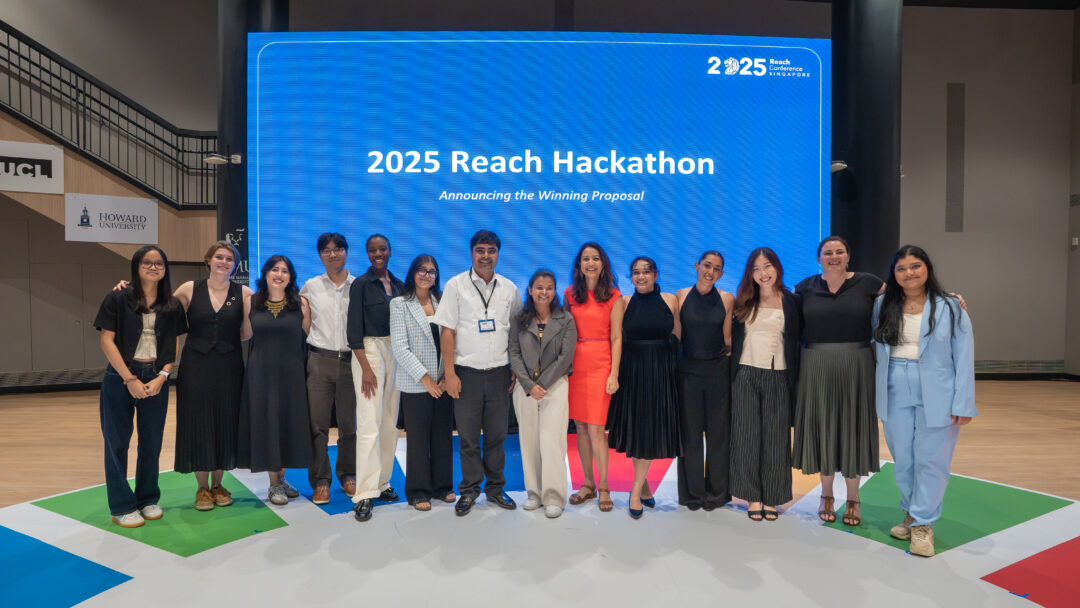
“This collaboration demonstrates how the Reach Alliance’s global consortium brings together universities, collaborators, and local communities to work together to drive actionable research and solutions for those who need it the most,” says Chloe Tan Chen Yi, Reach Alliance alumna and student at Singapore Management University.
Since the Hackathon, the group has continued to meet with local experts and collaborate with Rahat developers and mentors to translate lessons from Nepal into a broader “expansion playbook” for the Philippines. Their work has focused on defining the platform’s core features, identifying partnership models suited to the Philippines’ decentralized system of local government units, and adapting communication tools to align with local languages and regulatory requirements.
“The Philippines presents both urgency and opportunity. As one of the world’s most climate-vulnerable countries, it experiences recurring extreme weather events that disproportionately affect low-income households, women, and small businesses,” says Shristi Piya, Chief Development and Impact Officer at Rumsan.
“At the same time, its growing digital payments ecosystem offers a foundation for rapid, scalable aid distribution.”
The team has begun engaging international stakeholders to support the next phase of work, including discussions with the Mastercard Center for Inclusive Growth. Upcoming efforts will focus on selecting a pilot region in the Philippines, aligning with regulators and local partners, and testing the system across multiple typhoon seasons.
“This initiative is, at heart, a cross-sector experiment in moving from research to results,” says Dilip Soman, Reach Alliance Faculty Mentor, Professor at the University of Toronto, and Canada Research Chair in Behavioural Science and Economics.
“In this global collaboration between students and faculty, a mission driven tech partner, humanitarian organizations, and community collaborators, the team aims to help natural disaster responders act earlier, include more people, and make every transfer auditable.”
If successful, the project could offer a replicable model for anticipatory humanitarian aid—one that shifts the focus from reactive relief to proactive protection. In a world facing more frequent and severe climate shocks, that shift could help ensure that assistance arrives not after disaster strikes, but when it can still make the greatest difference.
More Latest Blogs
-
Blog
The Reach Alliance as a Model for 21st Century Teaching and Research
29/09/2026
-
Blog
Reach’s Alumni Council Continues to Shape the Future of the Alliance
10/08/2026
-

Blog
From Student Researcher to Emerging Leader: Celebrating Nice Cailie Ineza on International Youth Day