Investigating How To Get Important Stuff To Everyone, Everywhere

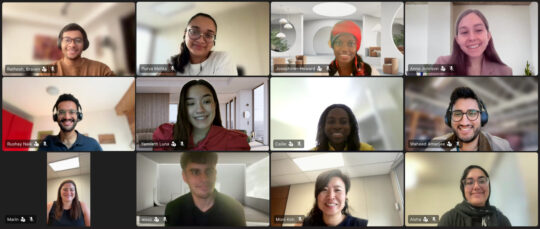
The Reach Alliance is a network of top global universities and leading companies investing in an inclusive economy, a system intentionally designed to prioritize the flourishing of people and the planet.

  • Zimbabwe Solar for Health

    Zimbabwe Solar for Health

    The World Health Organization reports that one in four health facilities in sub-Saharan Africa have little to no access to electricity, and only 30 per cent of health facilities reported having reliable access to electricity. To address this issue, the UNDP started the Solar for Health Initiative in 2015, starting with their pilot in Zimbabwe. The Solar for Health project aims to establish dependable electricity access for off-the-grid healthcare centers infrastructure – including clinics, labs, hospitals etc. – through solar panel installations.

  • Zimbabwe Africaid’s Zvandiri: Exploring the Scalability of Peer-led HIV Interventions Among Youth

    Zimbabwe Africaid’s Zvandiri: Exploring the Scalability of Peer-led HIV Interventions Among Youth

  • India Digital Green

    India Digital Green

  • Mali Leveraging Social Art for Behavioural Change (SABC) to Promote WASH Infrastructure Use in Mali

    Mali Leveraging Social Art for Behavioural Change (SABC) to Promote WASH Infrastructure Use in Mali

  • South Sudan Information is Aid: Voice Post’s Blue Messenger Bicycles

    South Sudan Information is Aid: Voice Post’s Blue Messenger Bicycles

  • Syria Syrian White Helmets: Manufacturing PPE in a Conflict Zone

    Syria Syrian White Helmets: Manufacturing PPE in a Conflict Zone

  • Mexico Strengthening small family businesses in Tequila, Mexico

    Mexico Strengthening small family businesses in Tequila, Mexico

  • Mexico The Invisibility of Children with Cognitive Disability in Marginalized Communities Inside Mexico’s Public Education System

    Mexico The Invisibility of Children with Cognitive Disability in Marginalized Communities Inside Mexico’s Public Education System

  • Mexico The City Seen By Women: A study on the appropriation of public spaces from a gender perspective

    Mexico The City Seen By Women: A study on the appropriation of public spaces from a gender perspective

  • United Kingdom Barriers to Perinatal Mental Health Services for Refugees and Asylum-Seekers in Camden

    United Kingdom Barriers to Perinatal Mental Health Services for Refugees and Asylum-Seekers in Camden

  • Canada Vaccine Provision for Remote Indigenous Communities in Ontario

    Canada Vaccine Provision for Remote Indigenous Communities in Ontario

  • Morocco Dar Si Hmad: Harvesting Water from Fog

    Morocco Dar Si Hmad: Harvesting Water from Fog

  • Peru Responding to Disaster: Lessons from Telecommunications Service in Peru

    Peru Responding to Disaster: Lessons from Telecommunications Service in Peru

    Peru’s internet infrastructure is highly susceptible to natural disasters and remain nonexistent in some parts of the country—specifically parts of the Peruvian Amazon rainforest. Through a public-private partnership between the government of Peru and Loon, an Alphabet Inc subsidiary company that provides High-altitude Platform Stations (HAPS) in the form of balloons, previously unserved areas were provided with internet access and critical information was shared through restored connectivity in the wake of several large-scale natural disasters. While Loon’s operation in Peru did not achieve commercial success, resulting in the company’s shut down in January 2021, this research will analyze how Loon provided internet connectivity to hard to reach populations in Peru. The study will also explore how private-public partnerships can provide affordable commercial internet access around the world.

  • Mozambique mVacciNation

    Mozambique mVacciNation

    Vaccination coverage for several routine vaccines is less than 75 per cent in many parts of in Mozambique, and the under-five mortality rate remains high at 97 deaths per 1,000 live births. A cross sector partnership established the mVacciNation (mVacc) program in 2014 to help tackle the issue of low vaccination coverage among children under the age of five. mVacc is a program based on the use of a mobile phone application. The application is used by healthcare workers to capture and record the vaccinations and health records of each child. With this data, they forecast and optimize vaccine stock levels and follow up with each child’s caregiver via SMS to remind them of upcoming vaccination appointments. Healthcare workers and program managers are able to track vaccine stock levels and ensure safe storage by immediately addressing any issues in the cold chain. The data is then synced and centrally stored on the Ministry of Health cloud, enabling the app to be integrated into existing data management systems.

  • Mexico Reshaping opportunities for migrant indigenous people in unregulated settlements of Monterrey Metropolitan Area

    Mexico Reshaping opportunities for migrant indigenous people in unregulated settlements of Monterrey Metropolitan Area

    The rapid industrialization of Monterrey in the last century and the lack of attention to social
    demands have hyper stratified social interaction in the city. Monterrey embodies the structural
    inequalities of Mexico and Latin America, where migrant indigenous people have had to face
    constant economic and social pressures, and at the same time remain the most invisible in the
    Northern Mexican society. This study aims to describe and explore to what extent the irregular status of urban settlements hinders the access to regulated basic services from migrant indigenous groups in the Monterrey Metropolitan Area and if this perpetuates the cycle of poverty.

  • Guatemala Healthy Pregnancy Project

    Guatemala Healthy Pregnancy Project

    Maternal mortality is disproportionately prevalent in low-income countries. Of the 295,000 women who died of complications from pregnancy or childbirth worldwide in 2017, 94 per cent lived in low-income and resource-limited settings. Guatemala’s Alta Verapaz region, where 78 per cent of the population lives in rural areas and 48 per cent live in extreme poverty, reported a maternal mortality rate of 273 in 2012. The EHAS Foundation (Hispanic American Health Link) is combating the issue of maternal mortality in rural Guatemala with the Healthy Pregnancy Project (HPP), a portable prenatal care kit that is designed specifically for use in remote areas. EHAS trains and equips local health personnel with a backpack that includes a computer, a portable ultrasound scanner – powered by a foldable solar panel – and, blood and urine analysis systems that use immediate test strips. Local health personnel organize days in their respective communities where women can come and be tested for possible pregnancy-related complications. Test results and ultrasound images are examined by local health personnel for any possible complications and health risks.

  • India Addressing Violence Against Women in Madhya Pradesh, India: The Urgent Action and Just Relief Program

    India Addressing Violence Against Women in Madhya Pradesh, India: The Urgent Action and Just Relief Program

    Studying the impact of Urgent Action and Just Relief (URJA) on improving women’s security in Madhya Pradesh, India. URJA is a policy intervention that aims to increase access to women to police services in India by providing four key activities:

    1. Creation of helpdesks to assist women
    2. Creation of Standard Operating Procedures (SOP) and trainings to guide officers on cases involving women
    3. Developing outreach to local women’s networks
    4. Hiring of additional female officers to URJA desks.

  • India Nazdeek

    India Nazdeek

    One out of seven workers in India’s formal economy is a tea plantation worker, of which, more than 50 per cent are women. Many of India’s tea plantation workers are located in the state of Assam, and these workers remain isolated from mainstream society, both physically and in terms of economic development. Nazdeek is a grassroots legal empowerment organization that is increasing access to justice, government programs, legal services and training for tea garden workers in Assam.

  • Thailand M Fund – a migrant micro insurance program

    Thailand M Fund – a migrant micro insurance program

    While Thailand is one of the few countries to have made concrete efforts to include undocumented migrants in their national insurance coverage, there exist barriers to access for up to two thirds of the estimated migrant population. Supported by UNICEF, European Union and the Global Fund, Thailand created the Migration-Fund (M-Fund) Health Insurance Program, which is a voluntary, low-cost and non-profit health insurance scheme for migrants operating along the Thailand-Myanmar border in Thailand. The M-Fund aims to protect the health of migrants uncovered by existing government insurance schemes.
    As of November 2019, a total of 13,383 people have enrolled in the program. Reach researchers are examining best practices, challenges and the value of a voluntary health scheme for vulnerable and stigmatized undocumented migrants in Thailand.

  • Solomon Islands Between State and Nonstate Systems: Access to Justice in Rural Solomon Islands

    Solomon Islands Between State and Nonstate Systems: Access to Justice in Rural Solomon Islands

    With almost 1,000 islands spread over tens of thousands of square kilometres and over 80 per cent of people living in remote and rural communities, delivery of law and order has been challenging in the Solomon Islands. Police presence on some islands is limited or even non-existent, breeding mistrust around governance. With support from the World Bank and the Australian government, the Solomon Islands Ministry of Provincial Government and Institutional Strengthening has established Community Officers and Village Peace Wardens to connect remote islanders to the state, gain local trust with authorities using a tailored community-based approach. Reach Alliance researchers are examining how this community-led project has seen a significant improvement in grievance management systems (over 77 per cent) and linkages to the government (over 68 per cent).

  • Rwanda Zipline’s Impact on Health Outcomes of the Hardest to Reach in Rwanda

    Rwanda Zipline’s Impact on Health Outcomes of the Hardest to Reach in Rwanda

    Rwanda’s mountainous topography and infrastructure makes medical supply delivery unreliable – with between 25 to 40 per cent of all temperature-sensitive medical supplies wasted due to inconsistent cold-chain infrastructure. Rural clinics face stockouts, and patients in need of specialized supplies are unable to acquire them. Zipline, a US-based health logistics company, addresses this issue by using drones to deliver medical supplies to district hospitals and rural health centres.

  • Mexico The ‘Making’ of a Makerspace: Community Stories and Lessons from Interventions in Cerro del Cuatro

    Mexico The ‘Making’ of a Makerspace: Community Stories and Lessons from Interventions in Cerro del Cuatro

    Although youth living in the Cerro del Cuatro community in Mexico face significant social and economic challenges, they also live in a community experimenting with entrepreneurship and improving socioeconomic conditions. This research analyzes how three global makerspaces operate in their own communities. The case studies can be used to inform further student research through the Professional Application Projects at ITESO University where learners seek to adapt contextually similar interventions to the local context of marginalized youth.

  • Mexico Women’s Economic Empowerment in Jalisco: Evaluating the Co-Meta Initiative and Collective Impact

    Mexico Women’s Economic Empowerment in Jalisco: Evaluating the Co-Meta Initiative and Collective Impact

    Co-Meta, an initiative based in Jalisco, mobilizes a network of local economic and social actors who support women’s economic empowerment. The network connects business leaders from across Jalisco, who act as mentors and instructors. This research project aimed to support Co-Meta as it scales up from 130 to 1,500 participants.

  • Kenya Left Behind: The Socioeconomic Barriers to Last-Mile Mobile Money Access in Kenya

    Kenya Left Behind: The Socioeconomic Barriers to Last-Mile Mobile Money Access in Kenya

    Nearly two billion people remain unbanked, leaving them unable to send or receive money, earn interest or get a loan. Recognizing an opportunity to address this challenge, Kenya’s leading mobile network operator, Safaricom, launched M-PESA in 2007. Billed as the world’s first mobile money service, it affords users the opportunity to transact, save money and get credit using their mobile phone. Since its launch, it has grown to over 40 million users and was a major driver in the two-fold increase in financial inclusion across the country. By unlocking the benefits of financial services to those users, M-PESA was found to have lifted 194,000 households, or 2 per cent of Kenyan households, out of poverty as of 2016 with larger benefits accruing toward female-headed households. Many people, however, remain unreached by M-PESA (and mobile money more broadly). This research examined who those people are and what traits they share in common, and aims to inform policy-makers on how to ensure they do not continue falling behind.

  • India Why Women’s Police Stations in India Fail to Mitigate Violence Against Women

    India Why Women’s Police Stations in India Fail to Mitigate Violence Against Women

    In India, women experiencing gender-based violence are hesitant to contact the police for fear of societal retaliation, social stigma, low conviction rates and maltreatment by the predominantly male police force. To address this, women’s police stations — staffed by female police officers — were established. Women’s police stations intend to provide a safe space for women to access formal legal services.

  • Tanzania Reaching the Last Mile: Tanzania’s Medical Supply Chain

    Tanzania Reaching the Last Mile: Tanzania’s Medical Supply Chain

    Tanzania has gradually and purposefully improved its system for distributing medical commodities. The use of GPS technologies and geo-mapping software to optimize delivery routes has made logistics and information management platforms more precise and efficient. Today, the Medical Stores Department is responsible for delivering all medical commodities directly to over 7,500 public and faith-based health facilities across the country.

  • Mongolia Providing Electricity to Nomadic Herders: Mongolia’s Renewable Energy for Rural Access Project

    Mongolia Providing Electricity to Nomadic Herders: Mongolia’s Renewable Energy for Rural Access Project

    Providing reliable, sustainable electricity to Mongolia’s 140,000 nomadic households. The World Bank’s Renewable Energy for Rural Access Program (REAP) helped the Mongolian government distribute over 100,000 solar home systems to rural nomadic families. At the project’s close, REAP improved the design and delivery of portable solar panels and provided 70 per cent of nomadic herders with electricity for their yurts.

  • Mexico Addressing Food Insecurity: Jalisco, Mexico

    Mexico Addressing Food Insecurity: Jalisco, Mexico

    Over 15,000 families in Jalisco, Mexico, experience food insecurity. The Guadalajara Food Bank provides these people, spread across 252 communities, with food aid. The Food Bank is currently focused on three aspects of their operations: sustainable procurement of high quality and healthy food items, waste reduction and reaching all families experiencing food insecurity.

  • Mexico Digital Upskilling in a Conflict Zone: Guadalajara, Mexico

    Mexico Digital Upskilling in a Conflict Zone: Guadalajara, Mexico

    Cerro del Cuatro in Guadalajara, Mexico, is a community experiencing significant amounts of gang violence. As a result, the youth social fabric and economic opportunities are considered weak. ITESO Universidad Jesuita de Guadalajara, collaborating with a local church, Parroquia Nueva Santa Maria, established a digital fabrication laboratory (FabLab) to provide digital upskilling opportunities to younger members of the community as an alternative to gang-activity.

  • Guinea Seasonal Malaria Chemoprevention in Guinea

    Guinea Seasonal Malaria Chemoprevention in Guinea

    In Guinea, malaria is the leading cause of death (28 per cent) for children under five — who already have an overall mortality rate of 89 per 1,000. Evidence shows that seasonal malaria chemoprevention (SMC) is effective in reducing the incidence of malaria among children under five in areas of highly seasonal malaria transmission.

  • India Providing Urban Amenities to Rural Areas: Addressing rural poverty in India

    India Providing Urban Amenities to Rural Areas: Addressing rural poverty in India

    Over two-thirds of India’s population lives in rural areas, and rural poverty remains a significant policy concern. Many people migrate from India’s rural to urban areas in search of better economic opportunities. Providing Urban Amenities to Rural Areas (PURA), was a rural development public-private-partnership program, which took a holistic approach to provide more services and opportunities to India’s hardest to reach areas.

  • India Polio Eradication in India

    India Polio Eradication in India

    In 1988, India had an estimated 200,000 polio cases per year and was one of the last countries to track and report cases of polio. Since then, the country consistently improved its polio vaccination and preventative healthcare programs. The polio program’s success can be attributed to motivated central leadership combined with comprehensive local commitment. By 2014, the WHO declared India to be polio-free.

  • Canada The Implications of Self-Directed Home Care in Ontario: A Case Study on Gotcare Services

    Canada The Implications of Self-Directed Home Care in Ontario: A Case Study on Gotcare Services

    Under the leadership of the Malaria-Control Program and the Anti-Malaria Campaign (AMC), various stakeholders coordinated their efforts to eliminate malaria. Widespread antimalarial strategies ensured the number of malaria cases in the country decreased by the 2000s to a level that allowed targeted interventions to proceed.

  • Tunisia Neighbourhood Upgrading in Tunisia: Connecting Informal Housing with Basic Services

    Tunisia Neighbourhood Upgrading in Tunisia: Connecting Informal Housing with Basic Services

    As a result of illegal subdivision of land by landowners, people in Tunisia continue to self-construct homes on plots of land that are not designated for residential buildings. In response to these informal neighborhoods, Tunisia looked to upgrade the neighborhoods by adding access to basic services like water and sanitation.

  • Sri Lanka Universal Malaria Elimination Program

    Sri Lanka Universal Malaria Elimination Program

    Under the leadership of the Malaria-Control Program and the Anti-Malaria Campaign (AMC), various stakeholders coordinated their efforts to eliminate malaria. Widespread antimalarial strategies ensured the number of malaria cases in the country decreased by the 2000s to a level that allowed targeted interventions to proceed.

  • Palestine Cash Transfers in Palestine: Building Blocks of Social Protection

    Palestine Cash Transfers in Palestine: Building Blocks of Social Protection

    Inequality remains stark between the West Bank and Gaza, with over 50 per cent of the population in Gaza living in poverty. In 2010, the state’s Ministry of Social Development implemented the Palestinian National Cash Transfer Program (PNCTP), aiming to enhance participants’ ability to meet their basic needs. Families are selected by means tests and the benefit is quantified to cover 50 per cent of the household poverty gap. The PNCTP reaches 119,000 families (41% of the total targeted), of whom 74,000 live in the Gaza Strip. The program targets those furthest from opportunity, with 84 per cent of beneficiaries reported in the lowest income quintile.

  • Ethiopia Ethiopia’s Productive Safety Net Programme: Addressing Food Insecurity with Food and Cash Transfers

    Ethiopia Ethiopia’s Productive Safety Net Programme: Addressing Food Insecurity with Food and Cash Transfers

    Prior to 2005, approaches to food insecurity in Ethiopia did not address the root causes of hunger. With the support of international donors, the Productive Safety Net Program was introduced to tackle climate resilience, community capacity building and rural market penetration through food and cash transfers. As of April 2020, the Productive Safety Net Program supports over 8 million of the most food-insecure people across Ethiopia.

  • Thailand Eliminating Mother-To-Child Transmission of HIV

    Thailand Eliminating Mother-To-Child Transmission of HIV

    The mother-to-child transmission (MTCT) rate of HIV in Thailand, at its worst, was over 20 per cent. Between 2000–2015, the MTCT rate decreased by over 90 per cent through improved antenatal care, antiretroviral therapy, service delivery and, monitoring and surveillance. Civil society organizations played a critical role in advocating for health services to reach everyone, everywhere.

  • Rwanda Expanded Program on Immunization: Near-universal Childhood Vaccination Rates

    Rwanda Expanded Program on Immunization: Near-universal Childhood Vaccination Rates

    Geography, a large rural population and extreme poverty, compounded with the 1994 genocide, all contributed to the challenges facing widespread childhood vaccinations. Rwanda scaled up its immunization program and other health and development programs to meet the Millennium Development Goals. Despite its geographic and historic barriers to improving child mortality outcomes, its immunization program clearly demonstrates effective reach.

  • Jordan UNHCR Jordan’s Biometric Cash Assistance Program for Syrian Refugees

    Jordan UNHCR Jordan’s Biometric Cash Assistance Program for Syrian Refugees

    In partnership with a local bank, and with support from a range of stakeholders, the United Nations Refugee Agency (UNHCR) developed the world’s first iris-scanning cash-assistance program for refugees in Jordan. Via an established network of iris-scanning enabled ATMs, the program provides monthly income support to the most vulnerable refugee families living in urban areas to help them meet their basic needs such as rent, food, utilities and health. Approximately 33,000 families have received support since 2012 with thousands more on the waitlist.

  • India Aadhaar Identification Program: Providing Proof of Identity to a Billion

    India Aadhaar Identification Program: Providing Proof of Identity to a Billion

    India sought to provide a unique, non-duplicable and fraud-resistant proof of identity to every resident (population 1.3 billion). Starting in 2009, India centralized digital identification through the Aadhaar program. The federal government navigated reaching all of India’s diverse populations through partnerships and contracts with other government agencies and private businesses.

  • South Africa Reaching the Hard to Reach: A Case Study of Birth Registration in South Africa

    South Africa Reaching the Hard to Reach: A Case Study of Birth Registration in South Africa

    Since 2007, the Integrated Community Registration Outreach Programme organizes mobile provision of social services to South Africans living in less accessible areas. Internet-connected mobile units provide integrated services such as birth registration, distribution of birth certificates and distribution of grants for hard to reach populations.

  • Brazil Reaching the Hard to Reach: A Case Study of Brazil’s Bolsa Família Program

    Brazil Reaching the Hard to Reach: A Case Study of Brazil’s Bolsa Família Program

    As the largest conditional cash transfer program in the world, the Bolsa Família Program, launched in 2003, currently provides income assistance to more than 14.28 million families through direct government-to-person electronic money transfers via the Caixa Econômica Federal. The program is impressive in its capacity to effectively reach families in the lowest income quintile through its active search (busca ativa) strategy.

Become a Reach Researcher

Join a global network of diverse, talented leaders with a shared passion for understanding how to reach those that are hardest to reach. Apply now to become a Reach researcher.

Latest At Reach

Global Network, Diverse Talent

With an annual cohort of up to 200 diverse, multi-sector leaders, we’re developing a global network that goes beyond the program

Meet the Alumni

Our Network Includes:

University of Toronto
MasterCard Center for Inclusive Growth
University College London
Univserity of Oxford
Technologico de Monterrey

Opportunites With Reach

Calling all diverse leaders: we are a student-led, faculty-mentored, multidisciplinary research initiative dedicated to investigating the pathways to success for innovative development programs that are reaching the world’s most marginalized populations.

Let’s Get in Touch

For inquiries and media contacts

Frequently Asked Questions?

Find your answers from recruitment to process