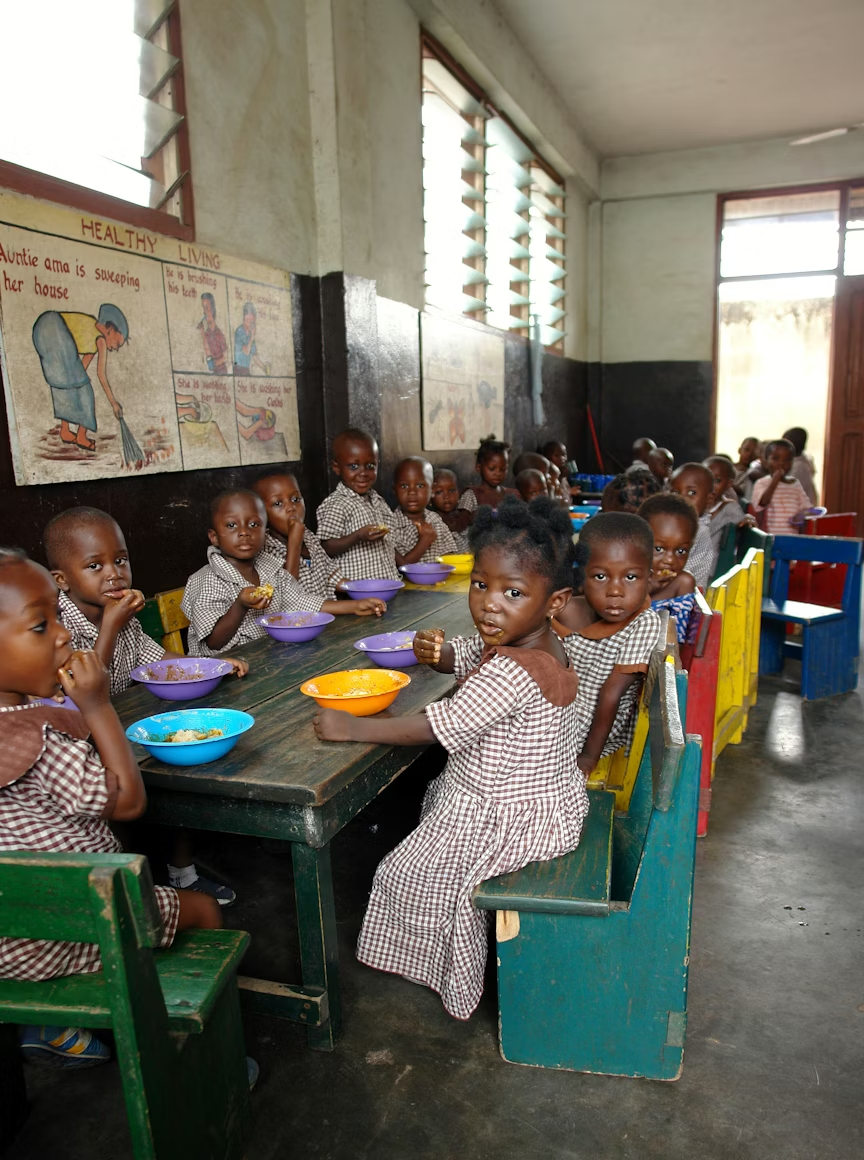
Ghana’s dream of a bright, youthful Africa by 2050 is quietly wilting under the weight of child food poverty, an invisible crisis destroying potential before it begins. While other threats dominate headlines, this one hides in plain sight, on children’s plates across rural and urban, poor and rich households alike.
UNICEF defines child food poverty as the consumption of fewer than five of the eight recommended food groups by children under five. In Ghana, most food-poor children consume only one or two of these food groups, mainly grains or tubers, and occasionally fish or vegetables. Though the severity and causes may differ, this challenge affects children across socio-economic boundaries. They all appear fed but lack essential nutrients for healthy growth and brain development. The result: stunted bodies, impaired cognition, weakened immunity, high child mortality, and billions lost annually in national productivity.
More menacingly, child food poverty stems from a complex web of interconnected factors that affect food availability and affordability, like climate shocks and the proliferation of ultra-processed foods and subtler issues such as cultural feeding practices and poor food choices. Policies such as the Ghana National Nutrition Policy and interventions by the World Food Programme have made progress but struggle with inconsistent funding, weak community participation, and gaps in food distribution, especially in rural areas.
This study seeks to uncover the systemic factors driving child food poverty across socioeconomic boundaries in Ghana, investigate the efficacy of existing interventions, and propose strategies to improve and augment these interventions.
Child food poverty is not a local problem; it is yet another manifestation of the global nutrition divide, where children are indeed fed but not nourished. Unless addressed, it will erode not only Ghana’s workforce of tomorrow but Africa’s shared future, today.