

Commentaries
Decolonizing the SDGs: Can “Leave No One Behind” Truly Mean Development for All?
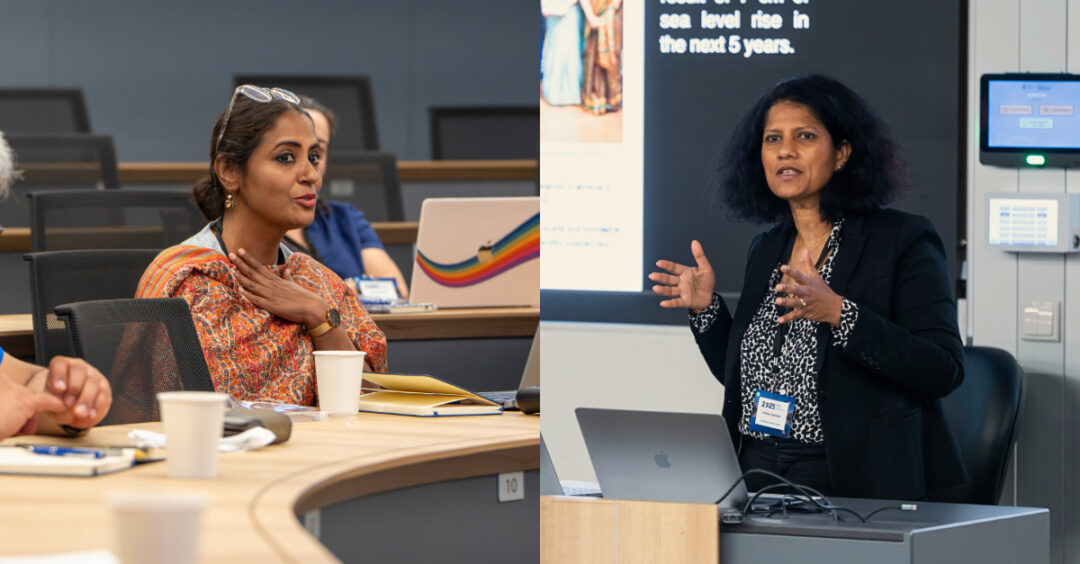
Decolonizing the SDGs: Can “Leave No One Behind” Truly Mean Development for All?
Authors: Pushpa Arabindoo and Lakshmi Priya Rajendran, University College London
With the ambitious promise to “leave no one behind,” the UN Sustainable Development Goals 2030 Agenda signalled a shift in the global development paradigm. The shared common future across the North-South binary would now be defined largely by urbanization. Its introduction of a stand-alone SDG 11 objective to make cities and human settlements everywhere more “inclusive, safe, resilient and sustainable” was informed by both academic and non-academic knowledge. And yet there is a dearth of intellectual imagination in the way we go about this task of advancing the global good through and in the city. Despite the SDGs’ premise and promise (especially SDG 11) to facilitate a closer collaboration between academics, communities, and practitioners through knowledge co-production, there has been little space for the plural and often contested understandings of urban processes such as rapid urbanization, peri-urban expansion, uneven infrastructure development, and informality — and their implications for sustainable development.
We identify two challenges. First, the SDGs promote a unified global urban agenda, most visibly through SDG 11, which encourages countries and cities to align their development strategies with a shared set of global targets. This has largely been taken up through the pervasive SDG language of localization. For instance, SDG 11.3 calls for “inclusive and sustainable urbanisation and participatory, integrated and sustainable human settlement planning and management,” signalling the expectation that global goals will be translated into local governance and planning practices. But with the 2030 Agenda steering toward implementation and monitoring, and reporting and evaluation, the SDGs perhaps raise rather than answer questions. Critics wonder whether this localization has a critical Southern sensibility to reflect the localization of global urbanism we think of in academic discourse.[1]
Second, the challenge of identifying what constitutes the urban hasn’t been sufficiently addressed with the urban SDG. Cities do not function in isolation: they are closely connected to surrounding peri-urban and rural areas, as well as to wider networks of cities through flows of people, resources, and economic activity. As a result, SDG 11’s targets and indicators often span multiple administrative areas, complicating what are already complex development challenges.For example, issues such as housing provision, transport systems, and climate resilience frequently extend beyond a single municipal boundary and require coordination between city governments and surrounding peri-urban or regional authorities.
The SDGs continue to be dominated by the language of mainstream development which involves strengthening partnerships between capital and resource extraction.[2] So calls to decolonize the SDGs are a crucial means of returning the SDGs’ focus to the persistent problems of poverty, violence, and inequality. Rather than asking “What is development?” in universal terms, a decolonial lens invites us to ask: Development for whom? On whose terms? And with what histories in mind? These questions shift the locus of theory from technocratic metrics and policy blueprints to the lived realities of those historically marginalized by development discourse. Decolonizing the SDGs enables new research agendas, methodologies, and knowledges to question existing assumptions about expertise while blurring the boundaries between theory, practice, and activism.
“Calls to decolonize the SDGs are a crucial means of returning the SDGs’ focus to the persistent problems of poverty, violence, and inequality. Rather than asking “What is development?” in universal terms, a decolonial lens invites us to ask: Development for whom? On whose terms? And with what histories in mind?” – Pushpa Arabindoo and Lakshmi Priya Rajendran, University College London
This concern becomes clearer when we look at our case study, “Blind Spot: Enabling Gender-Inclusive Climate Action in Peri-Urban Regions in India.” The project explores how climate vulnerabilities intersect with gender, caste, and peri-urban transformations, highlighting the kinds of lived realities that often remain invisible within the technocratic metrics used in SDG implementation. The team investigated the intersection of climate vulnerabilities with gender, caste, and peri-urban transformations through oral histories, community-embedded creative methodologies, and participatory filmmaking to document how women experience and respond to climate-related challenges. This approach foregrounds relational knowledge, embodied experience, and collective memory — dimensions that are often excluded from formal climate assessments and policy models. What emerges is not a neat data set but a complex, affective, and deeply situated set of narratives that challenge the SDGs’ technocratic logic. For example, while SDG targets might measure “adaptive capacity” through infrastructure or policy implementation, the women we worked with define adaptation through practices of care, mutual support, and intergenerational knowledge transfer.
Crucially, our project also engages with the emotional and ethical labour of research in such contexts. Fieldwork in marginalized communities involves navigating complex networks of trust, responsibility, and representation — dynamics that institutional ethics protocols struggle to capture. The SDGs, in their focus on outcomes and impact, tend to neglect the processes of knowledge production and the ethical obligations that researchers have toward the communities they work with. A decolonial approach to the SDGs thus requires reimagining not only what development looks like, but how development knowledge is produced, shared, and validated.
This call for decolonization is not merely theoretical. It demands concrete shifts in how global frameworks engage with context, history, and voice. For instance, what would it mean to design SDG indicators that recognize oral histories as valid data? Or to prioritize community-led definitions of well-being, resilience, and justice over externally imposed metrics? These are not easy shifts, but they are necessary if we are to move toward truly inclusive and equitable development.
Decolonizing the SDGs also means challenging the logics of scalability and replicability that dominate development practice. The desire to produce “best practices” often flattens difference and ignores the specificity of place. Our work in Kochi resists this tendency by refusing to treat local knowledge as mere input for global models. Instead, we approach it as a source of theoretical insight in its own right. We take Mariana Prado’s idea about the absence of “an overarching concept of development” as an epistemic opening that makes room for plural, place-based, and historically aware alternatives.[3]
Although significant financial resources have been directed toward SDG implementation over the past decade through programs funded by organizations such as the World Bank, UN agencies, and regional development banks, we confront a looming deadline for the 2030 Agenda with relatively limited evidence of transformative change. Some stakeholders call for the SDG framework to be adapted and extended to 2050, insisting that the SDGs should remain at the centre of global policy agendas.[4] If this is going to be the case, then we need to ensure that the next phase involves innovation and opportunity for transformative sustainable development. We need to build on the considerable academic attention analyzing the ideological and institutional forces underpinning these shifts as we seek out epistemologies and methodologies for bringing non-western and Indigenous knowledge systems to the core of development practice. Through this effort, we will perhaps see theory’s return to the SDG agenda in this process.
References
[1] Susan Parnell, “Defining a Global Development Agenda,” World Development 78 (2016): 529–40. http://dx.doi.org/10.1016/j.worlddev.2015.10.028
[2] Jessica Hope, “Globalising Sustainable Development: Decolonial Disruptions and Environmental Justice in Bolivia,” Area 54 (2020): 176–84. DOI: 10.1111/area.12626
[3] Mariana Mota Prado, “Sustainable Development Goals: The End of Theory?” Reach Faculty Reflections, Reach Alliance, Toronto, 2025. <https://reachalliance.org/commentary/sustainable-development-goals-sdgs-the-end-of-theory/>
[4] Francesco Fuso Nerini, Mariana Mazzucato, Johan Rockström, et al. “Extending the Sustainable Development Goals to 2050 — A Road Map,” Nature 630 (2024): 555–58. https://doi.org/10.1038/d41586-024-01754-6
About the Faculty Mentor Paper Series
This paper is part of the Reach Alliance faculty reflection series, Reimagining the Future of Sustainable Development, in response to Mariana Prado’s Sustainable Development Goals: The End of Theory? Featuring contributions from leading scholars across the Reach Alliance global academic consortium, the series opens a timely dialogue on the evolving role of universities in shaping the future of sustainable development theory and practice. Developed as part of Reach’s commitment to advancing research-to-impact and fostering interdisciplinary collaboration, these reflections aim to engage higher education professionals in shaping the future of the Sustainable Development Goals.