

Commentaries
Wicked Interdependences and Relational Futures in Education and Innovation: Why the Reach Alliance Is Ready
Wicked Interdependences and Relational Futures in Education and Innovation: Why the Reach Alliance Is Ready
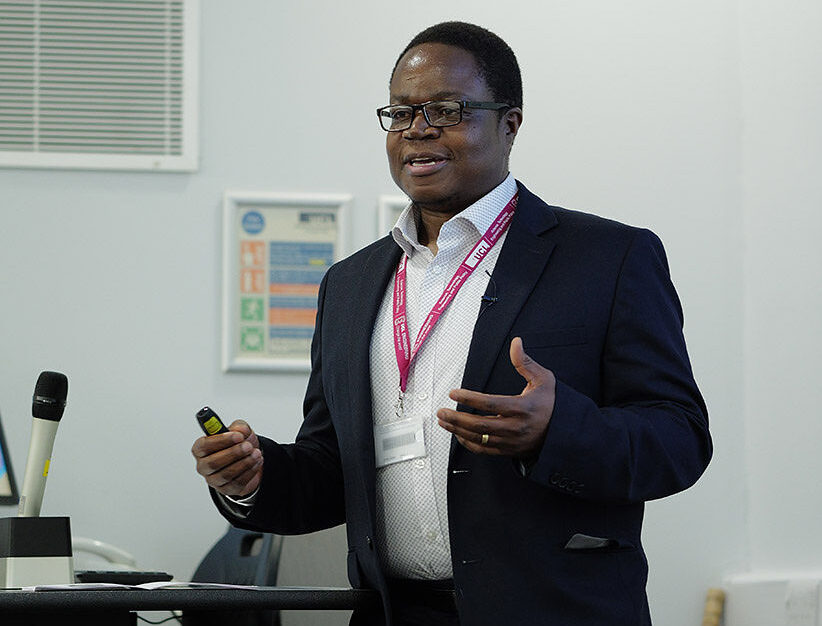
Author: Julius Mugwagwa, University College London
This provocation starts from a simple but consequential proposition. The significance of the Reach Alliance lies not merely in the projects it produces but in the institutional logic it represents. It anticipates a future in which universities function less as repositories of knowledge and more as platforms for collaborative problem solving. In an era defined by complex global challenges and increasing interdependence, the capacity to connect disciplines, sectors, communities, and geographies may become as important as the production of knowledge itself. The Reach Alliance offers a compelling prototype of this emerging university model — one where teaching, research, and societal impact are mutually reinforcing dimensions of a single mission.
The argument I develop in this provocation is that the contemporary world is increasingly characterized by wicked interdependences — complex configurations of actors, institutions, technologies, resources, and values whose interactions generate challenges that are simultaneously global and local, technical and political, and which resist disciplinary, sectoral, and geographically bounded approaches to knowledge production and problem solving.[1] Climate change, public health insecurity, forced displacement, food systems transformation, energy transitions, digital inequality, and social exclusion reveal not only technical deficits but relational failures in how societies organize knowledge, action, and collaboration.
Against this backdrop, the Reach Alliance represents more than an innovative teaching program or research consortium. It can be understood as an emerging institutional response to these conditions of complexity. Through its emphasis on interdisciplinary inquiry, experiential learning, cross-sector collaboration, community engagement, and global partnership, the Reach Alliance embodies forms of education and research that are increasingly required for navigating uncertain and interconnected futures. Recent analysis of the Reach Alliance across institutions including University College London, Ashesi University, and Tecnológico de Monterrey suggest that its significance lies not only in the projects produced but also in its institutional embeddedness as an international network that combines local engagement with global partnership and leadership development.[2]
This provocation is intended as an invitation rather than a definitive statement. The Reach Alliance encompasses a remarkable diversity of scholars, practitioners, students, and partner institutions working across different sectors, countries, and problem domains. The experiences of colleagues at the University of Toronto, University College London, Ashesi University, University of Cape Town, Amref International University, Tecnológico de Monterrey, University of Melbourne, Howard University, and Singapore Management University will provide rich empirical material with which to test, challenge, refine, and deepen the ideas advanced here.
Living in an Age of Wicked Interdependences
The 21st century is increasingly defined by a paradox. Humanity possesses unprecedented scientific knowledge, technological capabilities, and connectivity, yet the world’s most pressing challenges remain stubbornly resistant to conventional solutions.[3] Climate change, pandemics, food insecurity, forced migration, democratic fragility, digital exclusion, and widening inequalities are not discrete problems amenable to technical fixes. Rather, they are manifestations of deeply interconnected systems whose dynamics transcend disciplinary, institutional, and national boundaries. These challenges are best understood as products of what can be called wicked interdependences: complex configurations of actors, institutions, technologies, resources, and values whose interactions generate outcomes that no single actor can fully control or predict.[4]
The emergence of wicked interdependences raises profound questions about the future of universities. The educational institutions that shaped the twentieth century were largely designed around the production, preservation, and transmission of disciplinary knowledge. However, the educational challenge of the 21st century is increasingly not simply the acquisition of knowledge but the cultivation of capabilities for navigating complexity, uncertainty, and interdependence.[5] In this context the Reach Alliance offers a compelling glimpse of an emerging future. Reach’s significance lies not primarily in its individual projects, impressive though many of these are, but in the educational and research model it embodies. The Alliance appears remarkably well-positioned for a future in which relational capability, collaborative problem solving, and socially embedded knowledge production become defining features of both higher education and innovation systems.
Beyond the Knowledge Factory: Reimagining the University
At its core, the Reach Alliance addresses a central challenge confronting contemporary development and innovation practice: how innovations, policies, and services can effectively reach those who are geographically remote, socially marginalized, or administratively invisible. The Alliance brings together universities from Canada, the United Kingdom, South Africa, Ghana, Kenya, Mexico, Singapore, Australia, and the United States, alongside partners from government, civil society, and industry. Its focus on the “hard to reach” is especially significant because it directs attention away from innovation as invention alone and toward innovation as delivery, adaptation, and inclusion.[6] This resonates strongly with contemporary scholarship arguing that the critical challenge is often not generating new solutions but ensuring that existing solutions reach those who need them most.
The educational implications of this orientation are profound. Traditional university curricula often separate teaching, research, and societal engagement into distinct domains. Students learn theories in classrooms; researchers produce knowledge for publication; practitioners operate elsewhere. The Reach Alliance collapses these distinctions. Students undertake field-based, interdisciplinary research projects that engage directly with real-world challenges and involve collaboration with community organizations, policymakers, and practitioners. This reflects what Termine, Kim, and MacLeod characterize as the local–global possibilities of experiential learning, where students develop deeper learning capabilities through engagement with real-world sustainability challenges, interdisciplinary collaboration, and encounters with the complexities of societal transformation.[8] Learning occurs not through the passive absorption of information but through active engagement with complex societal problems. This reflects broader shifts in higher education toward experiential learning, challenge-based education, and forms of knowledge co-production that recognize communities as partners rather than merely subjects of research.[9]
Relational Capabilities Matter
The Reach Alliance does not simply promote experiential learning for its own sake. Its approach reflects an emerging recognition that effective action in complex systems depends upon the ability to build and sustain relationships across differences. Future challenges will not be solved by technical expertise alone. They will require individuals capable of navigating diverse institutional environments, building trust among stakeholders, negotiating competing priorities, and mobilizing collective action. Such capabilities can be conceptualized as relational capabilities: the capacity to connect actors, align interests, facilitate learning, and sustain collaborative action across organizational and societal boundaries. The cultivation of these capabilities may become one of the most important educational objectives of the coming decades.[10]
Examples from Reach Alliance partnerships illustrate this point. Research projects conducted through Reach’s global university partners have explored how interventions in health, education, climate adaptation, and social protection can better serve marginalized communities. These projects frequently reveal that barriers to impact are not primarily technological. Rather, they involve gaps in coordination, weak local ownership, institutional fragmentation, mistrust between stakeholders, or failures to adapt solutions to local contexts. Students engaged in this work learn that meaningful change rarely results from individual expertise alone; it emerges through relationships that enable stakeholders to work together despite differences in perspective, power, and resources. As Termine, Kim, and MacLeod observed, experiential learning within Reach frequently creates the kinds of “disorienting dilemmas” that expose students to alternative perspectives, requiring them to navigate ambiguity, collaboration, and intercultural engagement in ways that conventional classroom environments rarely achieve.[11]
This emphasis on relationality aligns with growing scholarship on mission-oriented innovation, systems transformation, and collaborative governance. Mazzucato, for example, argues that contemporary societal missions require coordinated action by diverse actors operating across multiple sectors.[12] Similarly, Ostrom highlights the importance of polycentric governance arrangements capable of managing complex collective-action problems.[13] What the Reach Alliance provides is a pedagogical environment in which students encounter these realities directly rather than merely studying them theoretically. In doing so, it prepares learners for a world in which coordination and collaboration are as critical as technical competence.
The future that the Reach Alliance appears particularly well prepared for is therefore not merely a digital future or a technologically advanced future. It is a relational future. Artificial intelligence, automation, and digital platforms will undoubtedly transform higher education and innovation systems. Yet these technologies may also simultaneously increase the importance of uniquely human capacities such as empathy, judgement, ethical reasoning, and relationship building. As information becomes increasingly abundant and accessible, value will derive less from possessing knowledge and more from the ability to connect knowledge across domains and translate it into socially meaningful action.
This observation raises a critical challenge for universities. Many institutions continue to reward individual achievement, disciplinary specialization, and publication outputs more heavily than collaborative problem solving or societal impact.[14] Yet the challenges students will face after graduation are increasingly organized around problems rather than disciplines. Climate adaptation does not belong to environmental science alone. Pandemic preparedness cannot be confined to public health. Inclusive development requires engagement with economics, politics, sociology, engineering, and culture simultaneously. The Reach Alliance anticipates this reality by organizing learning around challenges rather than academic silos.
Engaging with Dilemmas and Ambiguities
It would be a mistake to regard the Reach Alliance uncritically as a blueprint for the future. The model itself raises important questions. Experiential and challenge-based learning can be resource intensive and difficult to scale.[15] Global partnerships may reproduce inequalities if not carefully managed. Indeed, reflections from Reach partner institutions highlight the importance of ethical partnerships, co-creation, reciprocity, and attention to long-standing power asymmetries between Global North and Global South institutions as conditions for successful collaboration.[16]
Community engagement can sometimes become extractive rather than genuinely reciprocal. Universities must therefore remain attentive to questions of power, representation, and inclusion within collaborative research processes. The language of co-production and partnership, while attractive, does not automatically eliminate structural asymmetries between institutions in the Global North and South. A critical perspective requires recognizing both the transformative potential and the limitations of such models.
These tensions are themselves instructive. In fact, one of the Reach Alliance’s strengths may be its willingness to engage directly with the ambiguities and dilemmas inherent in development practice and societal problem solving. Wicked interdependences do not permit neat solutions. They require iterative learning, adaptation, and reflexivity. Students who participate in Reach research projects encounter uncertainty, incomplete information, and competing stakeholder perspectives. Rather than shielding learners from complexity, the model exposes them to it, thereby cultivating the adaptive capacities needed for leadership in volatile environments. This was my experience with the UCL students that I worked with in a 2023–2024 project on digital transformation for inclusive health in London, United Kingdom.[17]
Ultimately, the significance of the Reach Alliance extends beyond higher education. It offers insights into the future of innovation itself. Traditional innovation models have tended to privilege technological novelty, research, and development (R&D), and commercial success as primary indicators of innovation performance.[18] The Reach Alliance logic suggests a broader conception of innovation centred on inclusion, accessibility, and social impact. The key question becomes not simply whether an innovation works, but whether it reaches those who have historically been excluded from its benefits. This shift from invention to inclusion may prove increasingly important in addressing complex climate, public health, and economic challenges, including those that will shape the emerging post-2030 global development agenda
The future implied by the Reach Alliance is therefore one in which universities function less as isolated centres of expertise and more as platforms for connecting knowledge, people, and action. Teaching, research, and societal engagement become mutually reinforcing rather than institutionally separated activities. Success is measured not solely by intellectual outputs but also by the quality of relationships built, the capabilities developed, and the societal challenges addressed. In a world characterized by wicked interdependences, these relational capacities may prove as important as technical knowledge itself.
The Invitation
I invite Reach Alliance faculty members to engage critically with this provocation and its central argument, and to draw on their own research and mentoring experiences to add nuance, complexity, and empirical grounding to the argument. Several questions may be particularly useful:
- To what extent does the Reach Alliance represent a genuinely new model of higher education, and to what extent does it build upon longer traditions of engaged scholarship, experiential learning, and civic universities?
- What forms of knowledge, capability, and leadership are emerging through Reach Alliance research that conventional university structures often struggle to cultivate?
- How do different institutional and national contexts shape the possibilities and limitations of collaborative problem-solving approaches?
- What tensions, trade-offs, and contradictions arise when universities seek simultaneously to pursue scholarly excellence, educational transformation, and societal impact?
- How might the Reach Alliance experience inform broader debates about the future of innovation, development, and higher education in an increasingly fragmented yet interdependent world?
The purpose of this provocation is not to celebrate the Reach Alliance uncritically, nor to present it as a universal model. Rather, it is to open a conversation about how and to what extent Reach offers important clues regarding the kinds of institutions, capabilities, and relationships that may be necessary for addressing the challenges of the 21st century.
“The educational challenge of the 21st century is increasingly not simply the acquisition of knowledge but the cultivation of capabilities for navigating complexity, uncertainty, and interdependence. In this context the Reach Alliance offers a compelling glimpse of an emerging future.”
References
[1] Brian W. Head, “Forty Years of Wicked Problems Literature: Forging Closer Links to Policy Studies,” Policy and Society 38, no. 2 (2019): 180–97; Helga Nowotny, Peter B. Scott, and Michael T. Gibbons, Re-Thinking Science: Knowledge and the Public in an Age of Uncertainty (Cambridge: Polity Press, 2001); Elinor Ostrom, “Polycentric Systems for Coping with Collective Action and Global Environmental Change,” Global Environmental Change 20, no. 4 (2010): 550–57; Ulrike Zeigermann, and Stefanie Ettelt, “Spanning the Boundaries Between Policy, Politics and Science to Solve Wicked Problems: Policy Pilots, Deliberation Fora and Policy Labs,” Sustainability Science 18, no. 2 (2023): 809–21.
[2] Kate Roll, Marin MacLeod, Sena Agbodjah, and Iza M. Sánchez Siller, “Learning in Action: Embedding the SDGs through the Reach Alliance,” Sustainable Earth Reviews 7, article 15. (2024). https://doi.org/10.1186/s42055-024-00079-6
[3] Gerard George, Jennifer Howard-Grenville, Aparna Joshi, and Laszlo Tihanyi, “Understanding and Tackling Societal Grand Challenges Through Management Research,” Academy of Management Journal 59, no. 6 (2016): 1880–95.
[4] Head, “Forty Years of Wicked Problems Literature”; Nowotny, Scott, and Gibbons, Re-Thinking Science; Ostrom, “Polycentric Systems for Coping”; Zeigermann, and. Ettelt, “Spanning the Boundaries Between Policy, Politics and Science.”
[5] “Transforming Higher Education: Global Collaboration on Visioning and Action,” UNESCO, 12 March 2026.
[6] George et al., “Understanding and Tackling Societal Grand Challenges.”
[7] Richard Heeks, Digital Development: Theorising the Rise of ICT4D 2.0. (Manchester: Centre for Development Informatics, University of Manchester, 2022); John Kania, Mark Kramer, and Peter Senge, “The Water of Systems Change,” Boston, FSG, 2018.
[8] Perri Termine, Moni Kim, and Marin MacLeod, “A Dance of Dilemmas: The Local–Global Possibilities of Experiential Learning in Higher Education for Sustainable Development,” in Experiential Learning and Community: Examining the University’s Teaching Mission, edited by Michael Buzzelli (Toronto: University of Toronto Press, 2025), 193–212.
[9] Ernest L. Boyer, “The Scholarship of Engagement,” Journal of Public Service and Outreach 1, no. 1 (1996): 11–20; David A. Kolb, Experiential Learning: Experience as the Source of Learning and Development (Englewood Cliffs, NJ: Prentice-Hall, 1984); Nowotny, Scott, and Gibbons, Re-Thinking Science.
[10] John Owens, Vikki A. Entwistle, Luke K. Craven, and Ina Conradie, “Understanding and Investigating Relationality in the Capability Approach,” Journal for the Theory of Social Behaviour 52 (2022): 86–104.
[11] Termine, Kim, and MacLeod, “A Dance of Dilemmas.”
[12] Mariana Mazzucato, “Mission-Oriented Research and Innovation in the European Union: A Problem-Solving Approach to Fuel Innovation-Led Growth,” Brussels, European Commission Directorate-General for Research and Innovation, 2018.
[13] Ostrom, “Polycentric Systems for Coping.”
[14] Transforming Higher Education.
[15] Johan Malmqvist, Kamilla Kohn Rådberg, and Ulrika Lundqvist, “Comparative Analysis of Challenge-based Learning Experiences,” European Journal of Engineering Education 40, no. 5 (2015): 1–18.
[16] Roll et al., “Learning in Action”; Termine, Kim, and MacLeod, “Dancing with Dilemmas.”
[17] Bhavisha Darji, Juliette Henry, Konrad Krämer, Julius Mugwagwa, and Maria Kett, “Brent’s Digital Transformations for Inclusive Health in London,” Reach Alliance, November 2024. https://reachalliance.org/reports/digital-transformations-for-inclusive-health-a-case-study-of-brent-in-london/
[18] Jan Fagerberg, David C. Mowery, and R.R. Nelson, eds., The Oxford Handbook of Innovation (Oxford: Oxford University Press 2005); Christopher Freeman, Technology Policy and Economic Performance: Lessons from Japan (London: Pinter, 1987); Bengt-Åke Lundvall, ed., National Systems of Innovation: Towards a Theory of Innovation and Interactive Learning (London: Pinter, 1992).
About the Faculty Mentor Paper Series
This paper marks the beginning of the Reach Alliance’s second faculty reflection series, Is Reach the Model for Teaching and Research in the 21st Century? Featuring contributions from leading scholars across the Reach Alliance global academic consortium, the series opens a timely dialogue on the future of higher education, research, and innovation. Developed as part of Reach’s commitment to advancing research-to-impact and fostering interdisciplinary collaboration, these reflections aim to engage higher education professionals in the emerging discussions around new models of learning, knowledge creation, and societal impact.