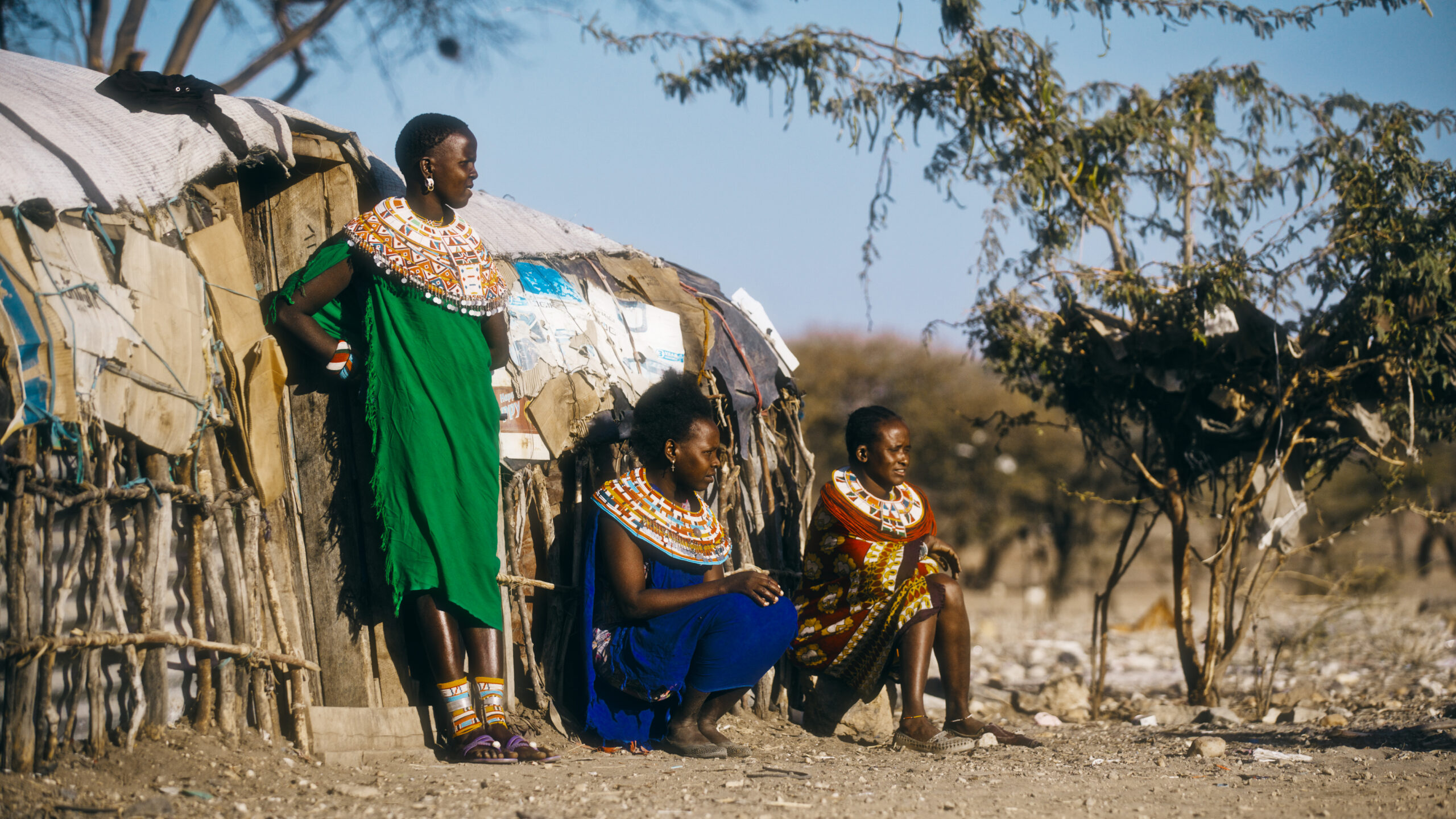
Kenya has made great progress in advancing maternal health; however, these gains have not been experienced equally across the country. In Wajir County, there are unmet targets in the provision of maternal health care, specifically antenatal care, skilled delivery, and postnatal care: only 57% of births are attended by a skilled provider and 43% occur at home, among the highest rates nationally, while ANC4+ coverage (45%) and postnatal care coverage (37%) both lag well behind national averages. The county’s maternal mortality ratio, estimated at 1,683 deaths per 100,000 live births, is more than five times the national figure. These gaps are especially pertinent among pastoralist communities, where seasonal movement in search of water and pasture disrupts contact with health facilities and makes it difficult to maintain continuity of care.
Kenya has invested in community-based primary health care as a strategy to bridge gaps in the maternal health continuum. Since 2023, Kenya has formalized this cadre under the Primary Health Care Act, deploying roughly 100,000 Community Health Promoters nationally. Working directly with households, CHPs identify pregnant women, promote antenatal care and facility-based delivery, support birth planning, refer women when danger signs arise, and facilitate postnatal follow-up. Their ability to play these roles within a mobile pastoralist community remains unclear. This study explores the role of CHPs in bridging the maternal health continuum in Wajir County and the factors influencing that role.