


Founded in 1827, the University of Toronto (U of T) is Canada’s leading institution of learning, discovery and knowledge creation. One of the world’s top research-intensive universities, students learn from and work with preeminent thought leaders through a multidisciplinary network of teaching and research faculty, alumni and partners. Consistently ranked among the top 10 public universities worldwide, U of T has remarkable strengths in disciplines that span the humanities, social sciences, sciences and the professions. U of T’s three campuses host 93,000 undergraduate and graduate students from 159 countries, who are taught by 15,000 faculty.
The Reach Alliance is advancing the University of Toronto’s three Presidential Commitments by:
- Preparing future-ready leaders through interdisciplinary, experiential research that equips students to address complex global challenges alongside academic, community, government and industry partners.
- Advancing responsible AI adoption by supporting research and solutions that leverage AI to improve public health, climate and economic challenges for hard-to-reach populations, with an emphasis on responsible and ethical implementation.
- Mobilizing knowledge for social and economic impact by translating research into practical solutions through partnerships with communities, governments and industry, generating actionable insights that inform policy and practice.

What others are saying
“The most rewarding component of the Reach Alliance has been learning alongside fellow researchers, scholars, and experts who have informed me of new research methodologies, the importance of ethical research, and how my Master’s research could encourage a more sustainable and localized approach to humanitarian responses.”
Isabel Davis
Hons. BA in Political Science and European Studies, University of Toronto, Reach Alum
“The impact of Reach on my professional growth has exceeded my expectations. My first experience speaking on a panel was through Reach and since then, I’ve been invited to speak at multiple events.”
Jemila Abdulai
Master of Engineering, Mastercard Foundation Scholar, University of Toronto, Reach Alum
“It has been an amazing experience to share, learn, and grow among a global cohort of such passionate and critical thinkers. I am trememedously passionate about the development of appropriate engineering technologies. I am very appreciative of programs like the Reach Alliance for fostering growth and development of individuals like myself, better equipping me as a global thinker!”
Jina Yazdanpanah
BA in Applied Science in Industrial Engineering, University of Toronto, Reach Alum
“As I became involved in Reach and learned more about global efforts to achieve the SDGs, my career focus shifted from clinical practice to more upstream approaches to addressing public health concerns. The research, network connections, and skills gained throughout my time with Reach prepared me to confidently enter the field of global health.”
Olivia Kuhlman
Master of Public Health Nutrition and Dietetics, University of Toronto, Reach Alum
“One of the key reasons I chose the University of Toronto over the University of Cambridge was the Reach Alliance. Throughout my education and career, I have been deeply fascinated by how to effectively implement and scale innovations to reach underserved populations. I am excited to join Reach to further develop my leadership potential and engage in impactful research..”
Naturinda Emmanuel
Master in Health Informatics, University of Toronto, Reach Researcher
“Our commitment to research and social impact is a testament to our belief that knowledge when harnessed and applied wisely has the power to bridge gaps, and barriers and create opportunities for all.”
Juan Pablo Murra
Rector for Higher Education, Tecnológico de Monterrey; Advisory Council, Reach Alliance
“Solving big problems requires collaboration and co-creation [across sectors and disciplines]. And leadership that is human! Reach prepares the next generation of global leaders by turbo-charging the development of human skills like adaptability, collaboration, creativity and empathy.”
Zabeen Hirji. Retired Chief HR Officer, Royal Bank of Canada; Executive Advisor, Future of Work, Deloitte; Advisory Council, Reach Alliance
“It’s a life-changing experience to share spaces, even if digital, with a community of people driven together by the desire to create a positive and lasting global impact. Reach is an example of what can happen when the right people get together and create opportunities for young people to get involved and to use their knowledge to build something bigger than ourselves.”
Giovanna Villalobos
Tecnológico de Monterrey, Reach Alumna
“Attending the 2023 Mexico Reach Conference helped me reflect on the importance of having a holistic and multidisciplinary approach to addressing global issues and creating innovative solutions. This has reignited my interest in using our research in an applied manner to make substantial and sustainable change. It was also incredibly motivating to hear about all the visionary research being conducted worldwide by our generation.”
Francesca Lanzarotti
University College London, Reach Alumna
Applications are currently closed. The next application cycle is expected to open in December 2026.
You can join our prospective student mailing list here to be notified when applications reopen.
U of T Recruitment Events
We’re excited to connect with students across all three University of Toronto campuses this fall! Come say hello at one of our upcoming in-person recruitment events and learn more about our research and leadership opportunity.The list will be updated as tabling and recruitment events are confirmed.
UTSC: GET EXPERIENCE FAIR
Date and Time: Wednesday, September 16, 2026, 11AM – 3PM
Registration: To be confirmed.
Applications for the 2026–27 Reach Researcher cohort is now closed.
Below is a step-by-step guide to help you through the process.
Application Instructions:
- Access the Application Portal
- Click on the “Application” button above to be redirected to the University of Toronto Application Portal page.
- Confirm Eligibility
- You must be registered for the Fall and Winter 2027–28 terms. Check the eligibility box, enter your name and university email, then click “Submit” to log in.
- Check Your Email
- Within a few minutes, look for an email titled “Welcome to the Reach Alliance Application Portal.” Flag it for easy access. If you don’t see it, check your spam folder..
- Resetting Your Password
- If needed, click “Already started a 2027–28 application?” and then “Forgot your password?” to receive a reset link.
- Access Your Application Dashboard
- Once logged in, you’ll see your Applicant Information and Application Forms. Click on the “2026–27 U of T Reach Researcher Application Form” to begin.
- Complete the Application Form
- A progress bar will track your completion. Be ready to upload a single PDF containing your resume and unofficial transcript.
- Saving and Submitting Your Application
- You can save your progress anytime. Once you click “Submit” on the final section, your application is locked.
📧 For technical issues, email: reachalliance.munk@utoronto.ca
Subject line: LastName, FirstName — Application Portal Technical Issue
How to Apply
Join our listserv to receive the latest updates!
To be eligible to be a Reach researcher, you must be an undergraduate or graduate student who is registered for the full next academic year (Fall & Winter 2026-27) at the University of Toronto. Reach researchers are recruited from a variety of disciplines and academic backgrounds, such as: engineering, business, law, global affairs & public policy, public health, medicine, social sciences, and more. Our research teams are interdisciplinary and collaborative, bringing together diverse perspectives that enrich the research process. Students learn from one another and gain valuable experience that prepares them for future teamwork and leadership in the workplace.
- The online application will be open from December 2025 to February 2026.
- Short Answer Questions
- Uploading Required Documentation
- Resume, unofficial transcript, annotated transcript, activity list.
- Shortlisted candidates will be invited to participate in a 30-minute interview and complete a pre-interview assignment.
- Interviews will be held virtually in March 2026. Candidates will meet with a panel that includes Reach alumni and staff.
- The final selection of the 2026-27 cohort of Reach Researchers will be made by the beginning of April 2026. All applicants (successful and unsuccessful) will be notified of the result through email.
- An all-day onboarding session will be held first week of May 2026. Please note: In-person attendance is required.
Should you experience any technical difficulties during the completion or submission of your application, please email reachalliance.munk@utoronto.ca with the subject line LastName, FirstName — Application Portal Technical Issue.
The Reach Alliance is committed to building on initiatives that address systemic and structural barriers that impede access to opportunities for participation in the learning and scholarly activities as outlined in its Equity, Diversity & Inclusion Charter. If you require an accommodation to apply or participate in the interview process, please contact us at reachalliance.munk@utoronto.ca.
Please visit: our FAQs page for more information
Meet the Team

Alumni
Researchers
Faculty
Mentors
Alumni Council
Research Reports

Canada
Improving Mental Healthcare in Northern Ontario through Ornge’s specialized Mental Health Team and ambulatory transport services

Mexico
Improving Cervical Cancer Screening Access in Mexico Through Self-Sampling

Canada
Health economic impact of AI-enabled in-home healthcare in rural Ontario
Research in Action Projects
Philippines
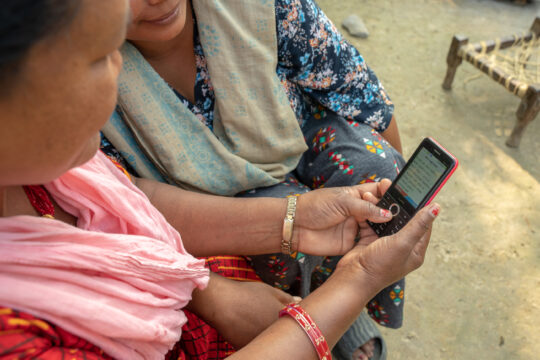
A Framework for Scaling Rahat Globally: The Case of the Philippines
Related Items
Blog
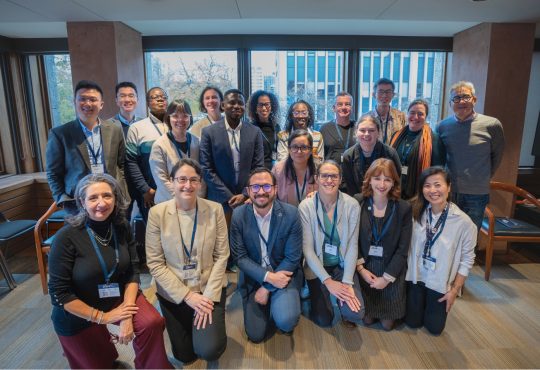
The Reach Alliance Faculty Mentor Reflection Series: Reimagining the Future of Sustainable Development
18/06/2026
Blog
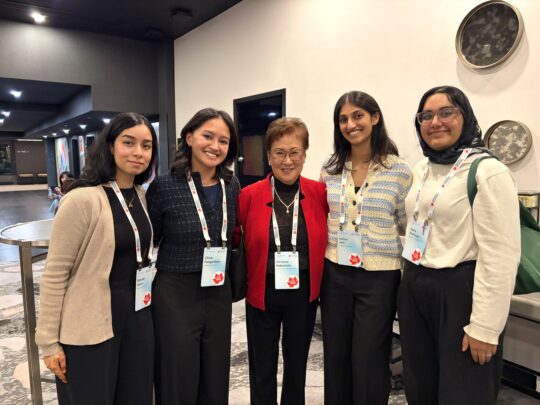
Reach Alliance at CanWIN Global Summit 2026: How women entrepreneurs are shaping the economy and driving global change
24/04/2026
Media