

Commentaries
Beyond a Knowledge Factory: Reflections on Five Years of Mentorship in the Global South
Beyond a Knowledge Factory: Reflections on Five Years of Mentorship in the Global South
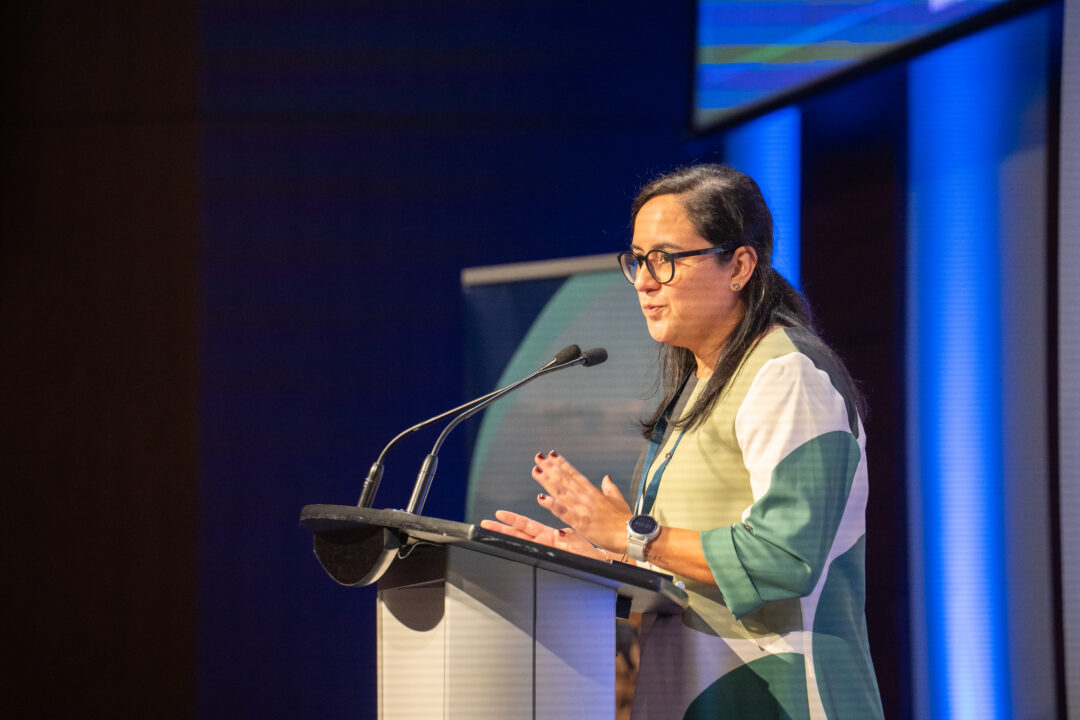
Author: Iza Maria Sánchez Siller, Tecnológico de Monterrey
After reading Professor Julius Mugwagwa’s thought-provoking piece, I spent a couple of weeks reflecting on his questions from my own perspective as a professor in Mexico, founder of an NGO that supports young children, and mentor to 10 Reach Alliance teams, all of whom worked in the Global South.[1] Everything he mentions resonates deeply with me, not only as something we as individuals, professionals, and universities aspire to, but as a reality I have had the privilege of living and co-researching. When Julius states that Reach’s relevance lies in its institutional logic and its ability to connect disciplines, sectors, and geographic regions, he is describing, with remarkable precision, the ecosystem I have watched grow up since 2020. I’m certain that my perspective as a mentor in the field, as a researcher, and as the founder of an NGO gives me the chance to answer, with hope, enthusiasm, and also reflection, with a yes. Yes, the Reach Alliance represents a unique way in which the model of teaching and research is evolving to meet what the 21st century demands. However, this path is not a linear one. It’s a path full of challenges, biases, and institutional and ethical tensions that we as educators have to face along the way in order to see real results.
One of the arguments from Julius that struck me most is that the value of education in the future lies in building students’ “relational capability,” beyond simply having technical competencies. In “traditional” classrooms, the problems presented to students tend to be more technical and, let’s say, orderly. By contrast, Reach immerses students directly in what we call the real world’s “wicked interdependences.” As a mentor over the past six years, I’ve witnessed this shift and its effect on my students, all of whom I’ve known since before they joined a Reach team. The transformation happens when these students confront what we so often see only on paper in the classroom. They get to experience it first-hand, to feel the frustration of uncertainty in the field, the barriers created by constantly shifting political priorities, the bureaucratic processes and obstacles that keep solutions, innovation, and change from reaching the “invisible” groups of society. (For example, at the recent large group meeting, a team was telling us about the difficulties they faced getting data from the government.) That’s where we, as mentors, step into the ring. We stop being vessels of technical knowledge and become ethical, and at times emotional, guides. We help our team navigate the “disorienting dilemma” that forces them to develop empathy, critical judgment, and skills they didn’t even know they needed to build. But here I’d like to pose a question: is this model built for every student and every professor? Are there certain profiles, on both sides, that won’t survive a paradigm shift like this one?
I’m not sure how bold it is to answer this, but here’s my take: this innovative model isn’t for everyone. We come from a system designed to reward certainty, and the paradigm shift that the Reach Alliance model represents acts as a natural filter. The “top” student we’re used to seeing at university is the one who memorizes formulas, knows how to follow linear rubrics to secure a specific grade on their transcript, but is also the one who can fall apart when faced with the “mess” of fieldwork. The same happens to us as educators, coming from a place where we’re used to being the authority in a classroom. While at Reach, a mentor who can’t tolerate the vulnerability of saying “I don’t know the answer, let’s figure this out together” is unlikely to last. This model demands a kind of relearning for both sides — for the student and for the educator. It asks us to trade the desire to control knowledge for the ability to hold uncertainty.
This resistance to control is exactly what brings us to the ethical core of the model. As a co-author of the research on the institutional embeddedness of the SDGs within Reach, and from my perspective as a social change agent running an NGO, I’m also very aware of the risk of falling into “academic tourism” or extractive research.[2] Julius rightly points to the power asymmetries between universities in the Global North and the Global South. After more than 20 years working with different vulnerable communities, I’ve learned that in Latin America, we cannot allow ourselves to treat these communities as laboratories for our “elite” students to practise and learn on.
This, I believe, is where Reach’s true innovation lies: there is a constant effort to ensure that what’s proposed doesn’t just “work,” but that attention is paid to “how” these solutions are co-created and delivered to communities in the most ethical and respectful way possible. After supporting so many teams, I think the hardest lesson, but also the most valuable one, has been helping students learn to listen, observe, and understand without assuming — to understand that a community leader, or a mother, holds local knowledge just as valid as any scientific paper; and that academic excellence doesn’t have to be at odds with social transformation. But to get there, humility, ethics, and reciprocity must come before the researcher’s ego.
On top of that, the kind of support a Reach team requires is all consuming. It’s emotional and managerial work (for both students and for us as educators) that is rarely accounted for in a professor’s official workload hours. Continuing with this model in the 21st century also requires institutions to be ready to formally recognize and reward the value of those of us who guide this kind of experiential, knowledge-based learning.
Is Reach the model for the 21st century? Yes, it is. But I’d also like to acknowledge that it isn’t a magic wand or a fixed manual. It’s a living, dynamic model, uncomfortable and deeply demanding, whose success will depend on the collective work of mentors and institutions, and on how willing both are to confront our own asymmetries and limitations.
“Academic excellence doesn’t have to be at odds with social transformation, but to get there, humility, ethics, and reciprocity must come before the researcher’s ego.”
References
[1] Julius Mugwagwa, “Wicked Interdependences and Relational Futures in Education and Innovation: Why the Reach Alliance Is Ready,” Reach Alliance Faculty Mentor “Provocation,” Toronto, Summer 2026.
[2] Kate Roll, Marin MacLeod, Sena Agbodjah, and Iza M. Sánchez Siller, “Learning in Action: Embedding the SDGs through the Reach Alliance,” Sustainable Earth Reviews 7, article 15. (2024). https://doi.org/10.1186/s42055-024-00079-6
About the Faculty Mentor Paper Series
This paper is part of the Reach Alliance’s second faculty reflection series, Is Reach the Model for Teaching and Research in the 21st Century?, in response to Julius Mugwagwa’s “Wicked Interdependences and Relational Futures in Education and Innovation: Why Reach Alliance is Ready.” Featuring contributions from leading faculty scholars across the Reach Alliance global academic consortium, the series opens a timely dialogue on the future of higher education, research, and innovation. Developed as part of Reach’s commitment to advancing research-to-impact and fostering interdisciplinary collaboration, these reflections aim to engage higher education professionals in the emerging discussions around new models of teaching and learning, knowledge creation, and societal impact.