
Bangladesh

Architecture for a World Under Water: Plinths along Northern Bangladesh’s Sandbar Communities as a Blueprint for Global Climate Adaptation

Academic Institution

Project Collaborator

Project Funder

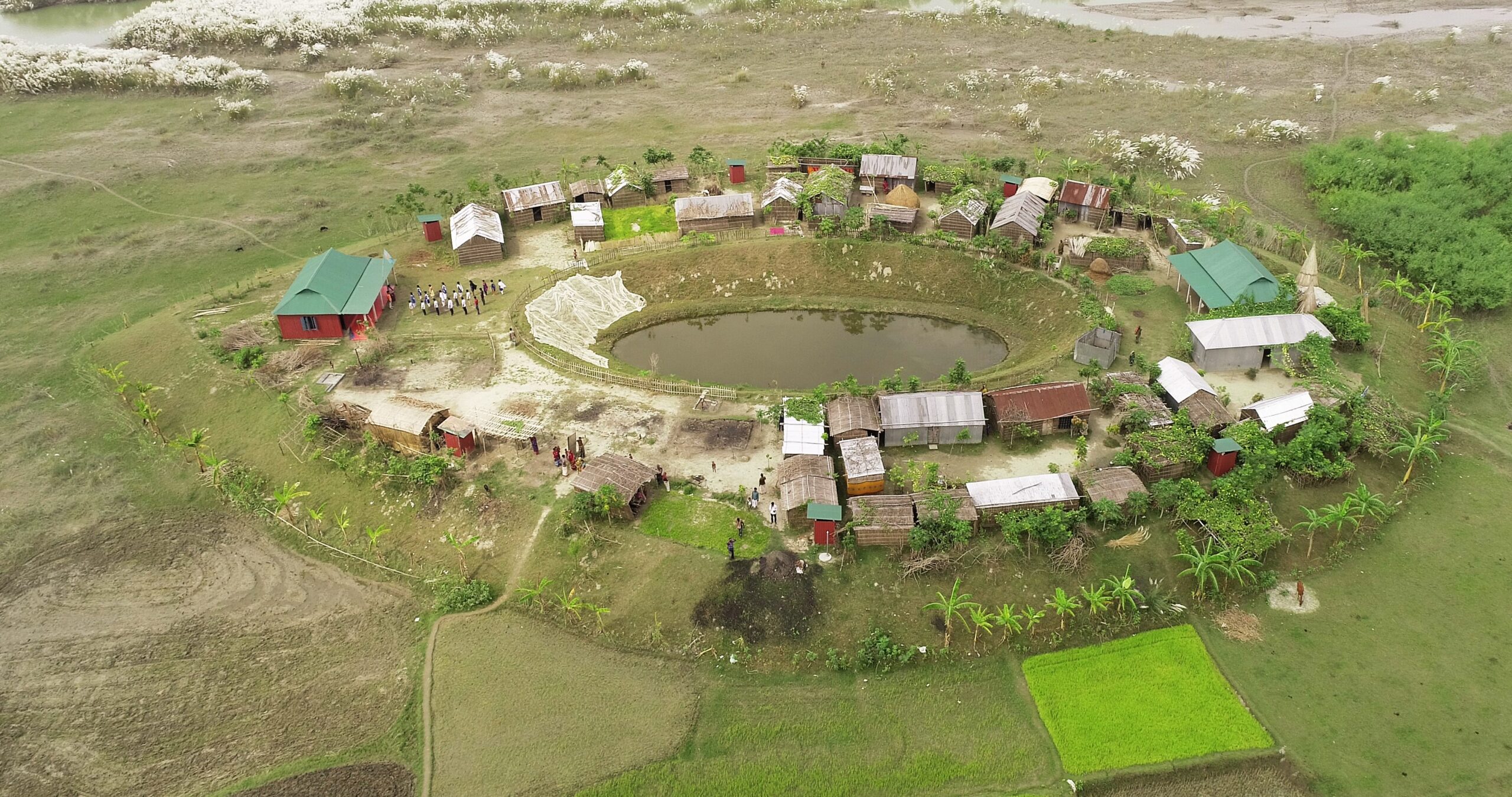
In the charlands of Northern Bangladesh, home to some of the country’s most geographically and administratively isolated communities, seasonal flooding has historically forced large-scale displacement, disrupting health, education, and livelihoods. Beginning in 2011, Friendship NGO pioneered raised plinths as a core resilience strategy from rising floodwaters, allowing families to remain in place through the flood season rather than being displaced. This research will examine the extent to which plinth infrastructure delivers sustainable, interdependent returns across three domains: agricultural and livestock productivity (e.g.  protection of livestock assets and stored grain), and environmental resilience (e.g. erosion mitigation and adaptive capacity to climate shocks), and social stability (e.g. reduced force displacement and increasing community confidence).

The study will assess whether these combined economic, social, and environmental benefits justify sustained public and donor investment. The research will also situate plinths within accelerating sea-level rise and growing climate displacement worldwide, asking: could this model serve as a scalable template for other flood-prone, hard-to-reach regions globally? The objective of the Reach Alliance is to generate new and actionable knowledge, focused on strengthening the delivery Friendship’s plinth infrastructure.