

Blogs: Latest Blogs
The Reach Alliance Faculty Mentor Reflection Series: Reimagining the Future of Sustainable Development
How a faculty paper series created space for dialogue and sparked a global conversation on sustainable development
By: The Reach Alliance
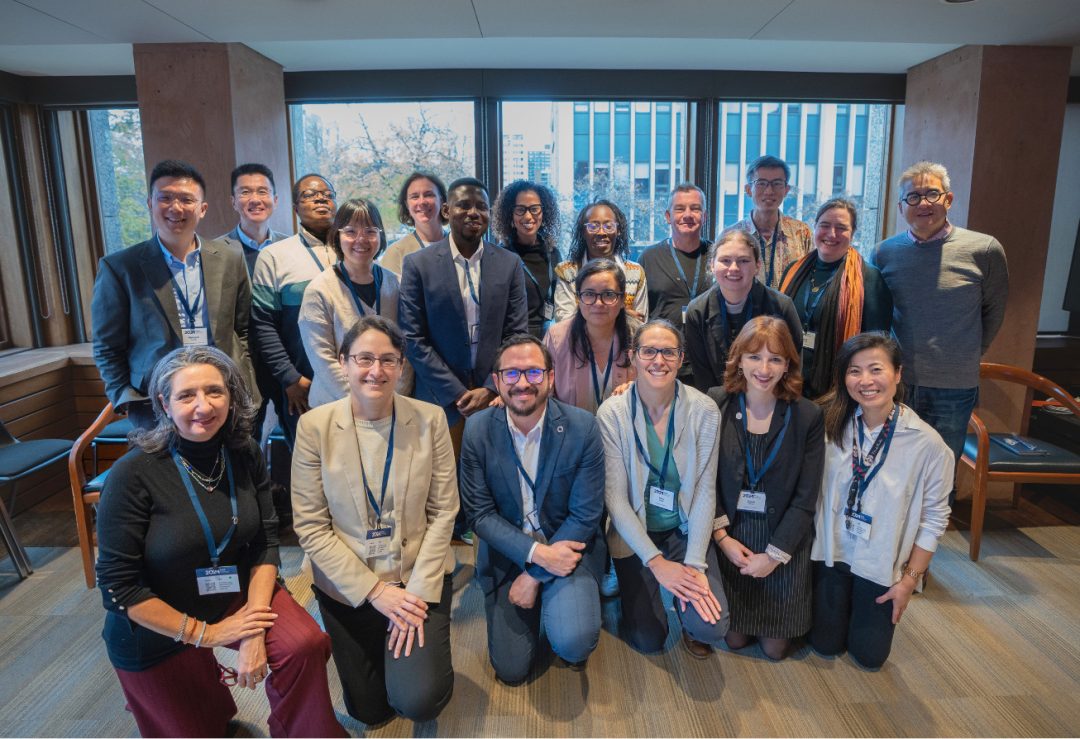
Meaningful academic dialogue does not always happen on its own. It requires intention, collaboration, and spaces where scholars can challenge ideas, share perspectives, and learn from one another. That principle sits at the heart of the latest Reach Alliance Faculty Reflection Series, Reimagining the Future of Sustainable Development, an initiative that has grown from a single conference discussion into a vibrant global exchange among faculty mentors and scholars.
The series emerged from a broader effort to strengthen connections among Reach Alliance faculty mentors. While mentors regularly support and guide students through research and fieldwork, the initiative was designed to create opportunities for faculty members themselves to engage in deeper academic collaboration and conversation.
The idea for the series came at the 2024 Reach Alliance Conference in Toronto.
“I presented the provocative claim of Sustainable Development Goals (SDGs) as the end of development theory, which sparked a very rich and engaging discussion,” said Professor Mariana Mota Prado, Vice Provost of Strategic Enrolment Management (previously Associate Vice-President and Vice Provost of International Student Experience) at the University of Toronto.
Following the conference, Prado and Reach Alliance Founder Professor Joseph Wong discussed how to extend the dialogue beyond the event itself.
“A lot of important questions were raised about the role of theory, practice, and academia in shaping sustainable development. It seemed natural to memorialize the conversation in writing, also including the opinion of those who could not attend the event,” said Prado.
Recognizing the competing demands on faculty members’ time, they decided that a series of short, accessible reflections would provide an effective way to encourage participation. Prado would outline the “end of development theory” argument in a concise paper, while Wong would contribute an initial response, creating a foundation for broader engagement.
What happened next exceeded expectations. The call for contributions generated an enthusiastic response from faculty mentors across the Reach Alliance network. Scholars quickly submitted thoughtful reflections, demonstrating both a strong interest in the topic and a shared commitment to interdisciplinary exchange.
“We were overwhelmed by the response—so many people contributed, and the pieces came shortly after our call, showing a lot of enthusiasm and commitment from our colleagues,” said Prado.
Beyond fostering faculty engagement, the series was designed to meet a broader intellectual need. It offers a forum for deeper theoretical discussion on the role universities play in advancing, shaping, and critically examining the post-2030 agenda, while also bringing together disciplines and perspectives that do not always have opportunities to intersect.
The success of the series highlights both the value and the challenge of interdisciplinary collaboration. While scholars clearly recognize the benefits of engaging across fields, meaningful dialogue requires dedicated structures and opportunities.
“I think this demonstrates the value of this kind of dialogue, but it also highlights that it does not happen organically. We need to create spaces that foster these conversations,” said Wong.
“The thought leaders, scientists, policymakers, innovators, and corporate champions who will shape the future are in our universities today. Their perspectives, knowledge, and expertise are required to develop and set the post-2030 agenda.”
Reach faculty see this series as only the beginning. Their vision is to transform this growing body of scholarship into a larger academic contribution, potentially through an edited volume or a special issue of a scholarly journal. Such a publication would not only preserve the insights generated through the series but also expand its impact within the broader global development community.
What began as a conversation at a conference has evolved into a powerful example of how academic networks can create space for critical reflection, collaboration, and innovation. As the Reach Alliance looks ahead to the 2026 Reach Conference at University College London, it welcomes ideas and contributions from faculty interested in advancing these conversations. The Faculty Mentor Conference Organizing Committee includes Professors Julius Mugwagwa (University College London), Adrian Little (University of Melbourne), and Mariana Mota Prado (University of Toronto).
Explore the full Faculty Mentor Paper Series, Reimagining the Future of Sustainable Development:
- “Sustainable Development Goals: The End of Theory?” by Mariana Prado, University of Toronto
- “Achieving the SDGs: Practice-Informed Theory” by Joseph Wong, University of Toronto
- “Beyond the Targets: Advancing a Theoretical Imperative for the Sustainable Development Goals” by Disraeli Asante-Darko, Ashesi University
- “Digital Technologies and SDGs” by Andrew Koh, Singapore Management University
- “Framing Health Equity in the SDG Era: Justice through Health Systems?” by Beverley Essue, University of Toronto
- “Localizing Medical Manufacturing in Africa and the SDG–Academia Argument: Insights from Mugwagwa, Mkwashi, Mackintosh, and Banda” by Julius Mugwagwa, University College London; Maureen Mackintosh, Open University; Geoffrey Banda, University of Edinburgh; Andrew Mkwashi, Newcastle University
- “Critical Reflection: Academia’s Evolving Role in Development Thinking in the Era of the SDGs” by Jorge Membrillo-Hernández, Tecnológico de Monterrey
- “Sustainable Development Goals (SDGs): Not Enough Theory (and Not the Right Kind!)” by Adrian Little, University of Melbourne
- “Decolonizing the SDGs: Can “Leave No One Behind” Truly Mean Development for All?” by Pushpa Arabindoo and Lakshmi Priya Rajendran, University College London
- “Rethinking SDG16 Access to Justice” by Ana Fierro, Tecnológico de Monterrey
- “The SDGs’ Implicit Theoretical Assumptions and Their Limitations” by Erica Di Ruggiero, University of Toronto
- “The SDGs’ Meaning for Maternity and Reproductive Health Studies” by Professor Sara L. Hillman, University College London
The Reach Alliance faculty reflection series, Reimagining the Future of Sustainable Development, features contributions from leading scholars across the Reach Alliance global academic consortium and opens a timely dialogue on the evolving role of universities in shaping the future of sustainable development theory and practice. Developed as part of Reach’s commitment to advancing research-to-impact and fostering interdisciplinary collaboration, these reflections aim to engage higher education professionals in shaping the future of the Sustainable Development Goals.
More Latest Blogs
-
Blog
The Reach Alliance as a Model for 21st Century Teaching and Research
29/09/2026
-
Blog
Reach’s Alumni Council Continues to Shape the Future of the Alliance
10/08/2026
-
Blog
From Student Researcher to Emerging Leader: Celebrating Nice Cailie Ineza on International Youth Day