

Blogs: Latest Blogs
The Reach Alliance as a Model for 21st Century Teaching and Research
Reach faculty mentors at the 2025 Reach Conference in Singapore.
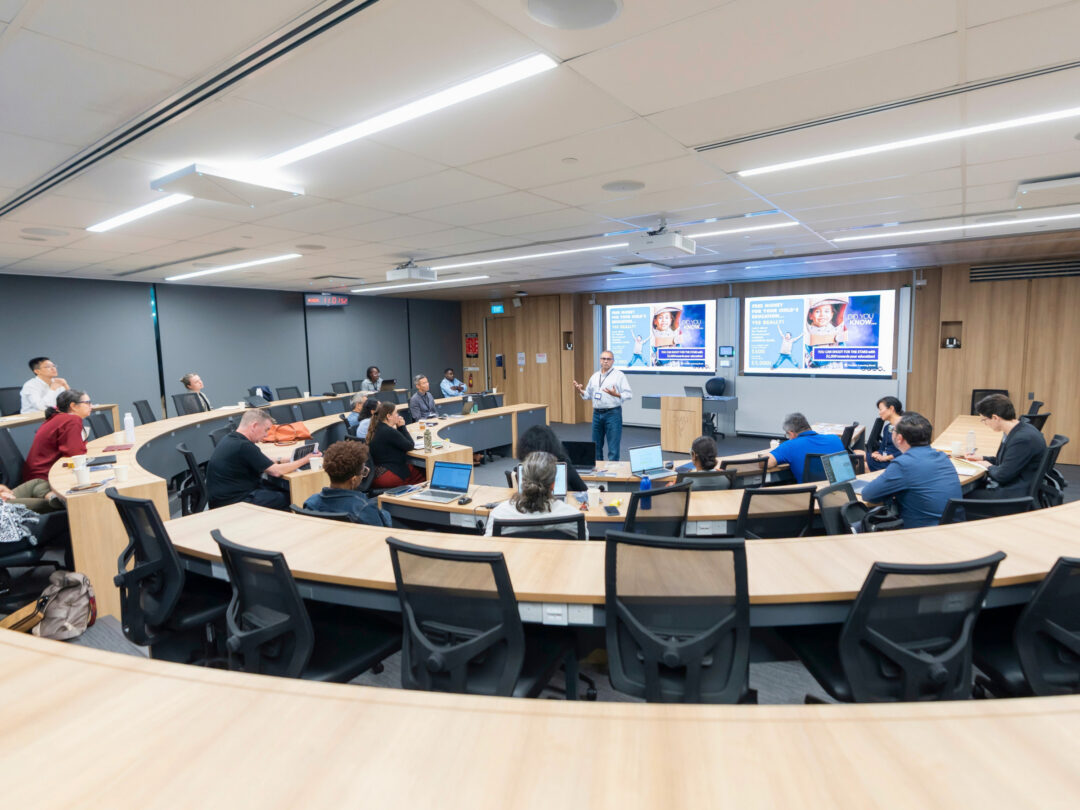
A new faculty mentor paper series asks whether Reach’s model of connecting teaching, research, and societal impact points the way forward for higher education
By: The Reach Alliance
Universities are being asked to do more than ever: educate students for an uncertain future, produce research that makes a difference, and respond to problems that cross borders and disciplines. The Reach Alliance’s second faculty reflection series asks if the Reach Alliance approach is the model for teaching and research in the 21st century.
The conversation began with a provocation from Professor Julius Mugwagwa. In his paper, “Wicked Interdependences and Relational Futures in Education and Innovation: Why Reach Alliance is Ready,” Mugwagwa argues that Reach is well positioned to meet the complex, interconnected challenges facing education and innovation today.
“The Reach Alliance offers a compelling prototype of this emerging university model — one where teaching, research and societal impact are mutually reinforcing dimensions of a single mission,” says Mugwagwa.
“What if universities’ greatest value isn’t the knowledge they hold, but their capacity to connect disciplines, sectors, and communities to solve problems no one field can solve alone?”
Faculty mentors from across the Reach Alliance’s global academic consortium were invited to respond. These initial contributions bring together faculty perspectives from different disciplines, institutions, and regions, offering a range of views on what a 21st-century model of teaching and research should look like.
This work builds on the momentum of the Alliance’s first faculty reflection series, Reimagining the Future of Sustainable Development, which demonstrated the rich engagement of higher education professionals in the emerging discussions around new models of teaching, learning, and generating impact.
“At Reach, we believe higher education has an important role to play in bridging the gap between knowledge and action,” says Moni Kim, Senior Programs Officer at the Reach Alliance.
“By working with communities, governments, and industry partners, universities can generate practical solutions that address complex challenges facing underserved populations. This series invites faculty to reflect on how research, teaching, and partnership can be integrated to create meaningful social impact.”
The series will be presented and discussed by the Alliance’s faculty mentor community at the 2026 Reach Conference in London, driven by faculty planning committee members Professors Julius Mugwagwa (University College London), Adrian Little (University of Melbourne), and Mariana Mota Prado (University of Toronto).
Explore the first contributions to the Faculty Mentor Paper Series, Is Reach the Model for Teaching and Research in the 21st Century?:
- “Wicked Interdependences and Relational Futures in Education and Innovation: Why Reach Alliance is Ready” by Julius Mugwagwa, University College London
- “From the Second-Last Mile to the Last Mile” by Dilip Soman, University of Toronto
- “Why Indigenous philosophy Helps Us Grapple with ‘Wicked Problems’ and How It Can Help the Reach Alliance to Redefine Impact” by Adrian Little, University of Melbourne
- “Real-World Challenge-Based Learning: Why the Reach Alliance Model Is the Paradigm of 21st-Century Education” by Jorge Membrillo-Hernández, Tecnológico de Monterrey
- “Beyond a Knowledge Factory: Reflections on Five Years of Mentorship in the Global South” by Iza Siller, Tecnológico de Monterrey
The Reach Alliance’s second faculty reflection series, Is Reach the Model for Teaching and Research in the 21st Century? features contributions from leading faculty scholars across the Reach Alliance global academic consortium and opens a timely dialogue on the future of higher education, research, and innovation. Developed as part of Reach’s commitment to advancing research-to-impact and fostering interdisciplinary collaboration, these reflections aim to engage higher education professionals in the emerging discussions around new models of teaching, learning, and generating impact.
More Latest Blogs
-
Blog
Reach’s Alumni Council Continues to Shape the Future of the Alliance
10/08/2026
-
Blog
From Student Researcher to Emerging Leader: Celebrating Nice Cailie Ineza on International Youth Day
-
Blog
A Reach Alliance Series: Pathways from Evidence to Action
27/07/2026